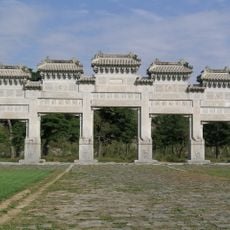
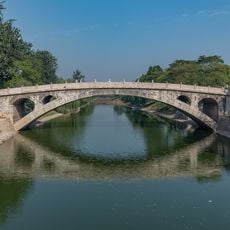
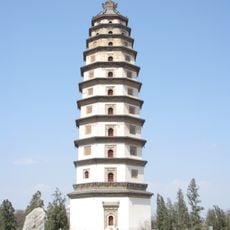
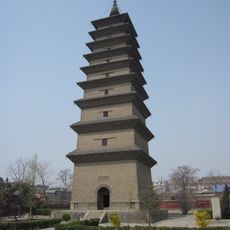
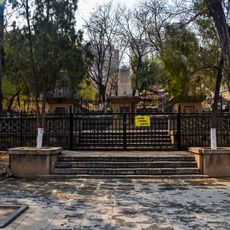
Beiyue Temple, Taoist temple in Quyang County, China.
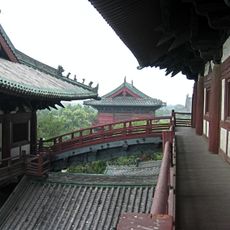
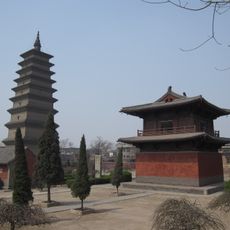
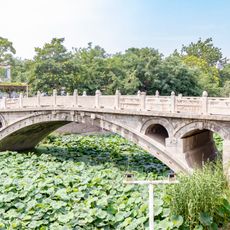
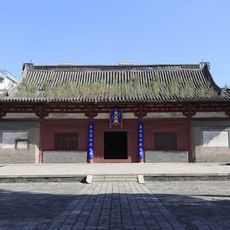
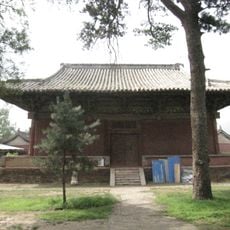
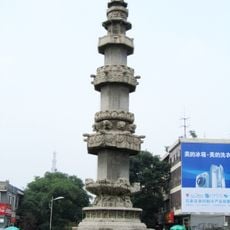
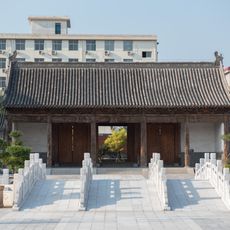
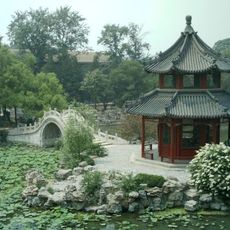
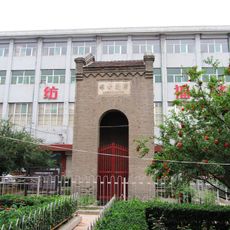
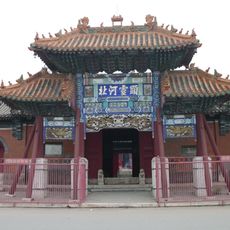
Beiyue Temple is a large Taoist shrine in Hebei Province with several halls, gates, and pavilions spread across its grounds. The buildings show typical features of Chinese temple architecture with their curved roofs and decorative elements.
The temple was first built during the Northern Wei Jingming-Zhengshi era (500–508) and rebuilt in 991 after Khitan troops burned it in the 950s. It was rebuilt again in 1270, the year the Dening Hall was constructed. From the Northern Wei until 1660, when sacrifices were transferred to Mount Heng in Shanxi, emperors worshipped the Northern Peak here.
The temple was built to sacrifice to the god of Mount Heng, the Northern Peak, and was also known as the Beiyue Antian Yuansheng Di Temple, or locally as the Douwang Hall. From the Northern Wei to 1660, emperors sent sacrifices here; in 1660 the rites were transferred to Mount Heng in Shanxi. The Dening Hall's east and west walls carry murals, attributed by local tradition to the Tang painter Wu Daozi, showing the Dragon King and a water deity.
The temple lies on a north–south axis; from the south gate you pass the Tianyi Pavilion and two further gates before reaching the Dening Hall, whose yuetai platform is climbed by a central stair or one of two side stairs. The surviving grounds measure about 300 by 139 metres, so allow time to walk between the buildings.
The Dening Hall's roof is held up by 6th puzuo column brackets, with three transverse and three horizontal arms, the most complex bracketing surviving from the Yuan dynasty. A white marble balustrade capped with lions rings its yuetai platform, which measures 25 by 20 metres.
The community of curious travelers
AroundUs brings together thousands of curated places, local tips, and hidden gems, enriched daily by 93,845 contributors worldwide.