Xumi Pagoda, Buddhist temple in Zhengding, China
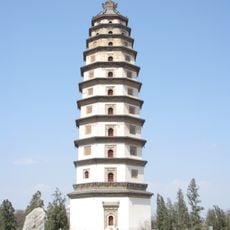
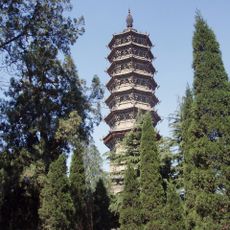
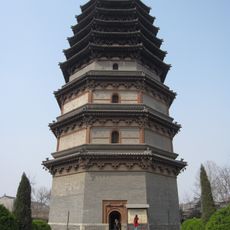
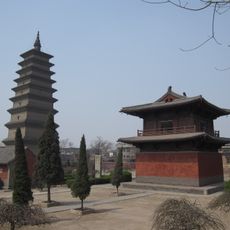
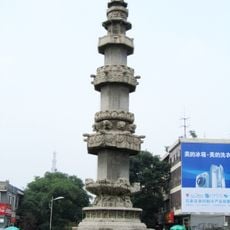
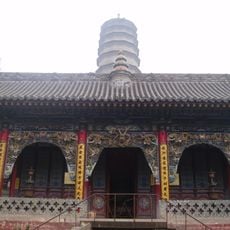
Xumi Pagoda is a brick and stone Buddhist tower located in Zhengding County, Hebei Province, China. It rises through nine tiers of roof edges on a square base, and a damaged bixi statue, a mythical tortoise-dragon creature, stands near its entrance.
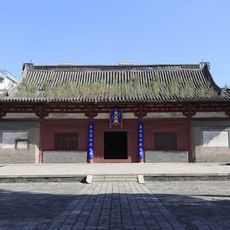
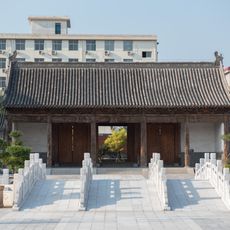
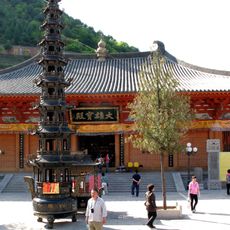
The Xumi Pagoda was built in 636, during the reign of Emperor Taizong of the Tang dynasty, as part of the Buddhist Kaiyuan Monastery west of Zhengding. The monastery that once surrounded it has largely been destroyed, leaving only a few structures. The pagoda itself has been well preserved since its initial construction.
The name Xumi refers to Mount Sumeru, the cosmic mountain of Buddhist cosmology, and the pagoda also carries the name Summer Pagoda. The monastery that once surrounded it, Kaiyuan Monastery, has largely disappeared, leaving only a few structures beside the tower.
The exterior of the pagoda and the bixi statue near the entrance can be seen without going inside, as the interior is closed to visitors due to missing stairs. Taking time to walk around the full base of the tower gives the best view of the stone carvings.
The bixi statue near the entrance was buried underground for centuries and only came to light during excavation work in 2000. It was left in its damaged state on the site rather than restored, so visitors see it exactly as it was found.
The community of curious travelers
AroundUs brings together thousands of curated places, local tips, and hidden gems, enriched daily by 94,019 contributors worldwide.