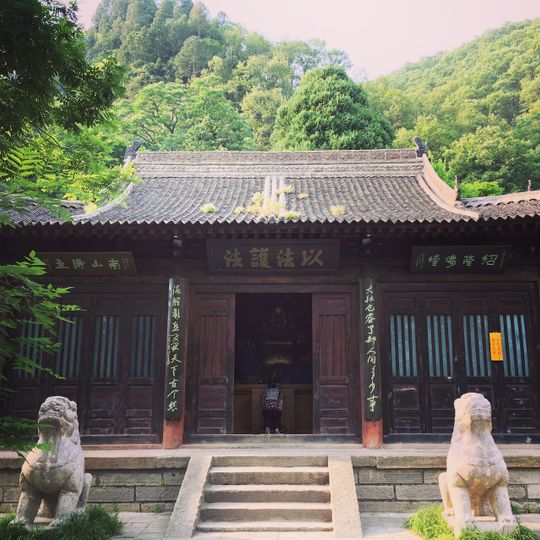
Jingye Temple, Buddhist temple in Chang'an District, Xi'an, China
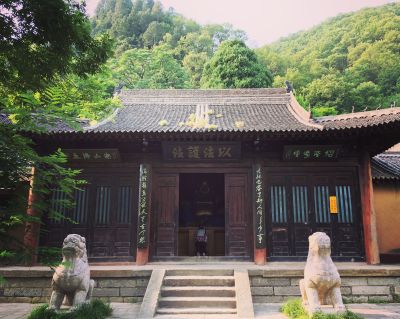
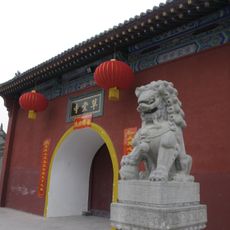
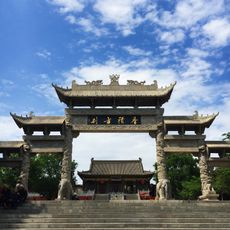
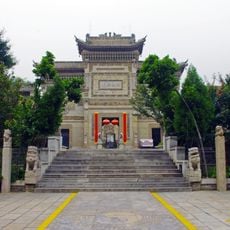
Jingye Temple is a Buddhist temple on the north slope of the Zhongnan Mountains in Chang'an District, Xi'an, Shaanxi. Its buildings run south-facing along a central axis: the Shanmen gate, Four Heavenly Kings Hall, Mahavira Hall, Five Contemplations Dining Hall and Buddhist Texts Library. The gate was designed by architect Zhang Jinqiu, and its plaque bears characters by Nan Huai-Chin.
Founded in 581 at the start of the Sui dynasty, the temple became the base of master Daoxuan from 624, when he taught Risshū and it was renamed Baiquan Temple. In 665 Emperor Gaozong ordered a stone ordination altar built here. After the Tang fall it declined, was renovated three times in the Ming, and was devastated during the Cultural Revolution before reopening in 1983.
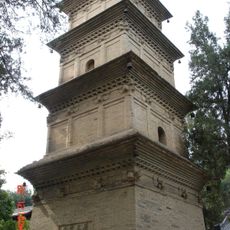
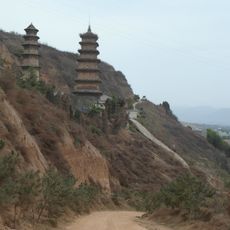
The temple is the cradle of the Risshū school, founded on the teaching of Daoxuan, whose statue stands in the Four Heavenly Kings Hall. A stupa built for him in 667, now a five-storey brick structure from 1713, stands on the grounds. The temple was designated a National Key Buddhist Temple in 1983.
The temple welcomes visitors and functions as both a religious center and tourist destination with a clear layout. When planning a visit, consider the hillside location and allow time to explore the various halls and spaces at your own pace.
The temple's link to Japan runs through Jianzhen, a disciple of the Risshū tradition who led monks to Japan and founded the Japanese Risshū school. The stone ordination altar Emperor Gaozong decreed in 665 stood at the temple where Daoxuan taught; the present Daoxuan stupa, a five-storey hexagonal brick tower about 6 metres high, dates from 1713 and was renovated in 1832.
The community of curious travelers
AroundUs brings together thousands of curated places, local tips, and hidden gems, enriched daily by 94,543 contributors worldwide.