Caotang Temple, Buddhist temple in Huyi District, Xi'an, China
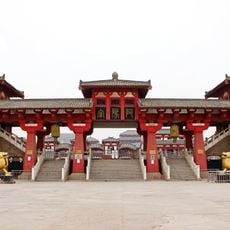
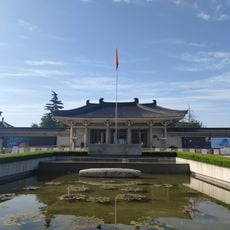
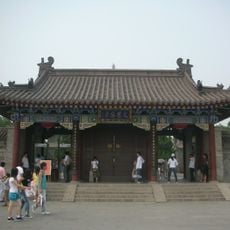
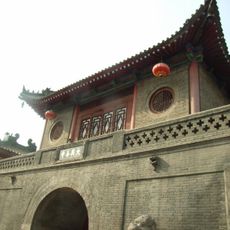
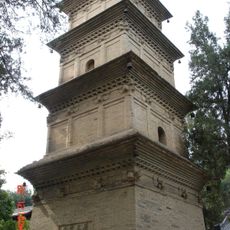
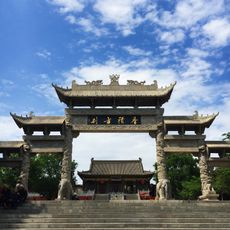
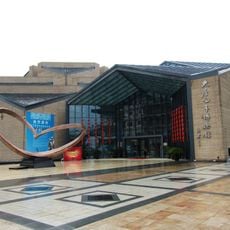
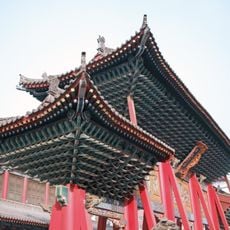
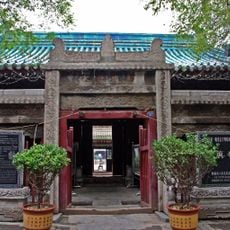
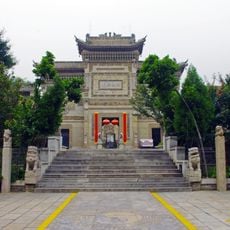
Caotang Temple is a Buddhist temple in Huyi District, Xi'an, built on the northern slope of Mount Guifeng. Its buildings follow traditional Chinese architectural design with multiple halls arranged symmetrically along a central axis.
In 401 Emperor Yao Xing of Later Qin founded the Xiaoyang Garden to house the monk Kumārajīva, and the temple grew from this site. Kumārajīva translated the Madhyamika-sastra, Sata-sastra and Dvadashamukha Shastra here, making Caotang Temple the cradle of East Asian Mādhyamaka. The temple was destroyed under Northern Wei and Northern Zhou persecutions, rebuilt in Sui times, and renamed Qichan Temple under Guifeng Zongmi in the Tang.
The name Caotang, "thatched cottage", comes from the thatch-roofed lecture hall Emperor Yao Xing built for Kumārajīva. The temple is revered as the cradle of East Asian Mādhyamaka, and a memorial hall built by Japanese Nichiren Buddhists holds a 120-cm wooden statue of the monk, with poems by Zhao Puchu and Japanese poets set into its walls.
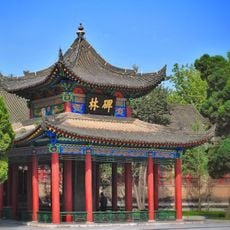
Caotang Temple lies at the foot of Mount Guifeng in Caotang Subdistrict, Huyi District, southwest of central Xi'an. The grounds cover about 120 mu, roughly 248 metres north to south and 324 metres east to west, with the halls aligned south to north along a central axis. The Smoky Well sits in the northwest corner, and the Kumārajīva stupa stands just south of it under a hexagonal shelter.
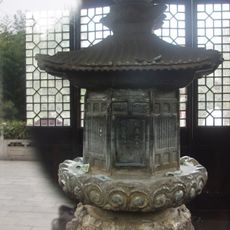
The Stupa of Kumārajīva is assembled from eight kinds of marble and jade in grey, white, blue-black, ink-black, cream, pale yellow, light blue and purplish-brown, hence its name "Eight-Treasure Stone Pagoda". It stands 2.47 metres tall in twelve tiers, and its base conceals a hollow chamber thought to have held his relics or ritual objects.
The community of curious travelers
AroundUs brings together thousands of curated places, local tips, and hidden gems, enriched daily by 94,068 contributors worldwide.