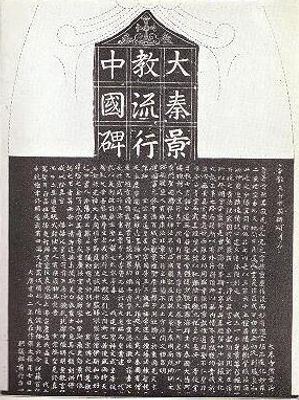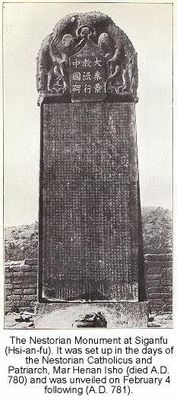
Nestorian Stele, Stone monument in Xi'an, China.
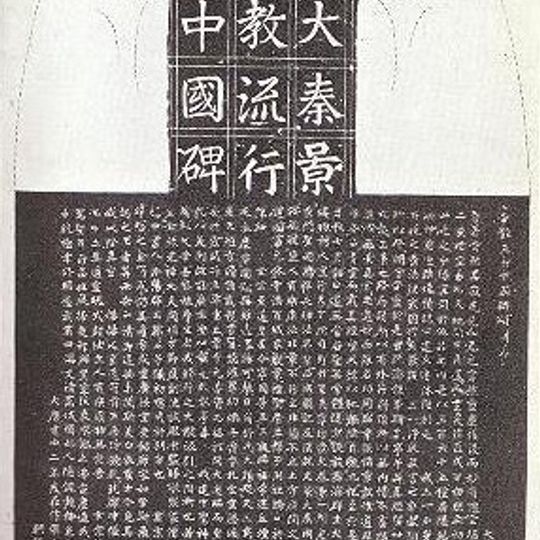
The Nestorian Stele is a limestone monument in the Beilin Museum of Xi'an bearing bilingual inscriptions in Chinese and Syriac. The surface displays a cross atop a lotus leaf and roughly 1900 characters below, along with Syriac names of clergy.
The tablet was erected in the year 781 during the Tang Dynasty and documents Christian mission work since the 7th century. It remained buried for over a millennium after religious persecutions marked the end of this early community.
The name "Nestorian" comes from the Christian tradition that reached China along Silk Road trade routes, where missionaries adapted their teachings to local thought. Visitors today can see how Chinese characters describe concepts like Trinity and baptism using familiar philosophical terms.
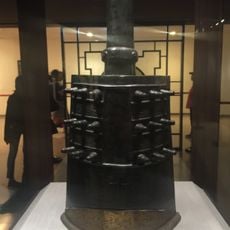
The monument is housed in the Beilin Museum, which holds a large collection of stone tablets and inscribed relics. Visitors can view the inscriptions up close and study the combination of pictorial motifs and text.
The text mentions that an imperial decree authorized the construction of a church in the capital and ordered portraits of the ruler to be placed on its walls. This merging of religious and imperial symbols shows the respect the new teaching enjoyed at court.
The community of curious travelers
AroundUs brings together thousands of curated places, local tips, and hidden gems, enriched daily by 91,378 contributors worldwide.