Han Yanling, Imperial mausoleum in Shaanxi, China
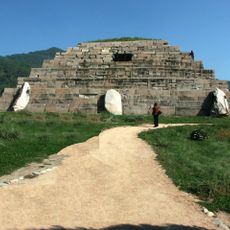
Han Yanling is an imperial mausoleum featuring numerous satellite tombs arranged around a central burial chamber. The entire site follows traditional architectural principles with earth mounds that reflect the status and design practices of the period.
Yanling was built for Emperor Cheng of the Western Han, who reigned from 33 BC and died in 7 BC. Sources mention its construction in 31 BC. Cheng first prepared a secondary tomb, Changling, but abandoned it around 16 BC, probably because of the cost, and was buried at Yanling. The burial chamber has never been excavated; surveys of the tomb area were last carried out in 2002.
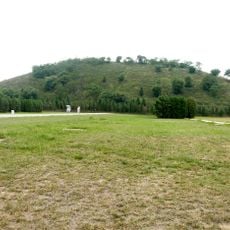
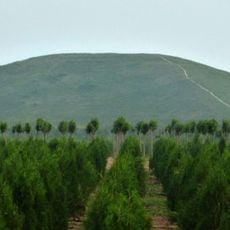
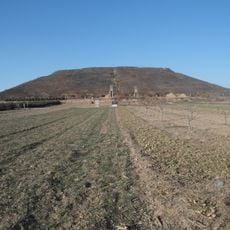
The tomb mound is topped by a crater about 30 metres wide and four metres deep, and the burial chamber itself has never been excavated. A stele erected by the scholar-official Bi Yuan (1730–1797) identifies the mound as Emperor Cheng's tomb. Nearby satellite tombs are traditionally linked to Empress Xu and the concubine Ban Jieyu, though their exact locations remain debated.
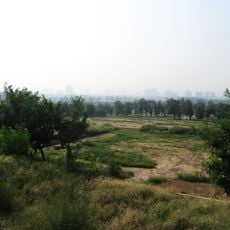
The mound and its satellite tombs stand in open farmland at Yanjiagou village, Zhouling township, Weicheng district, northwest of Xi'an; there is no excavated chamber to enter. The burial mound is oriented north–south with about ten degrees of deviation to the west, and the surrounding wall measured roughly 500 m east–west and 400 m north–south. Expect rough ground and walk the site on foot.
The burial chamber has never been excavated, so the tomb mound and its surroundings are all that archaeology has examined; surveys in 2002 mapped the layout. A stele erected by Bi Yuan (1730–1797) stands at the mound and identifies it as Emperor Cheng's tomb. The flat top of the pyramid holds a pit about 30 metres across and four metres deep.
The community of curious travelers
AroundUs brings together thousands of curated places, local tips, and hidden gems, enriched daily by 93,178 contributors worldwide.