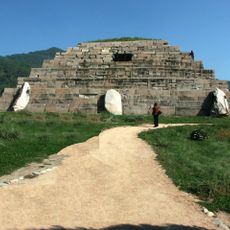
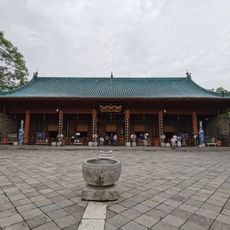
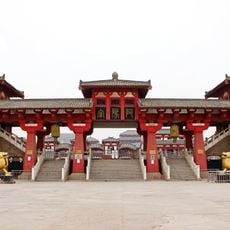
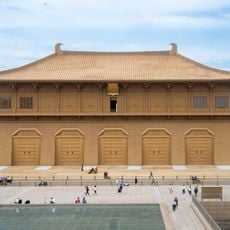
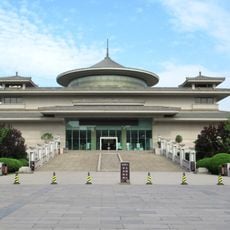
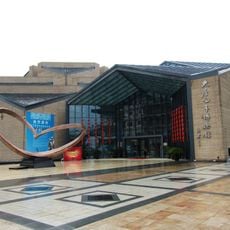
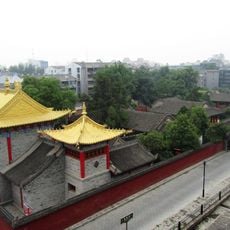
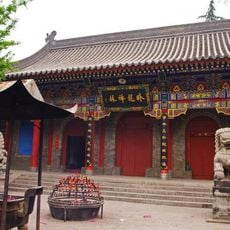
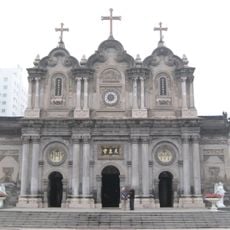
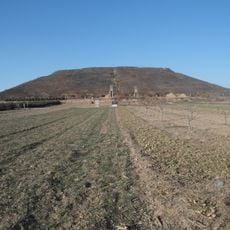
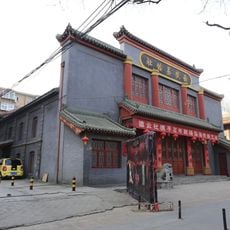
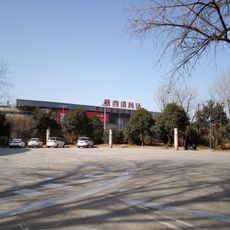
咸陽文廟, Confucian temple in Xianyang, China.
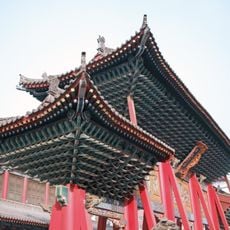
The Xianyang Confucian Temple is a historical structure composed of several halls decorated with stone carvings, inscriptions, and statues. The buildings display architectural details that reflect different periods of Chinese construction traditions.
The temple was founded in 1371, the fourth year of the Ming Hongwu reign, by county vice-magistrate Kong Wenyu, after the Xianyang county seat moved east from Xingping to Weishui Station and the temple was built west of the seat. It was repaired in 1427, 1459, 1474 and 1615, rebuilt in 1681 under the Qing Kangxi emperor, and repaired again in 1815, 1866 and 1888. In 1943 county magistrate Liu Fayu had its Ji Gate demolished; the museum was founded on the site in 1962, and the complex became a provincial protected site in 2003 and a national one on 25 May 2006.
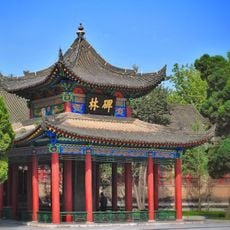
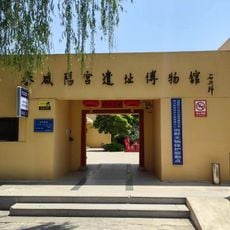
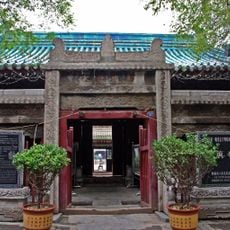
The complex became the Xianyang Museum in 1962 and now forms the Xianyang Museum (Xianyang Bowuyuan). Its southern gate is a wooden paifang moved here in the early Republic from the 1371 Xianyang City God Temple, and the first and third halls were built in 1963 from parts of the City God Temple and the Zhousi Wang Temple.
The complex faces south at 53 Zhongshan Street in Weicheng District and is arranged in four successive courtyards covering 8,531 square metres. Visitors pass the wooden archway moved here from the City God Temple, then the first hall, the Dacheng Hall and the third hall. The Dacheng Hall, 21.7 metres wide and 7 metres deep, is the largest structure.
The wooden archway at the museum entrance was not built for the temple: it was the first wooden paifang of the Xianyang City God Temple, erected in 1371, and was moved to the former lingxingmen position in the early Republic. In 1943 county magistrate Liu Fayu had the temple's ji gate demolished.
The community of curious travelers
AroundUs brings together thousands of curated places, local tips, and hidden gems, enriched daily by 94,018 contributors worldwide.