ZKM Center for Art and Media Karlsruhe, Art and media center in Karlsruhe, Germany
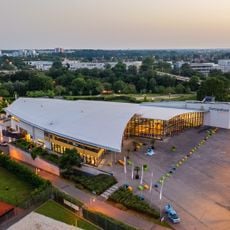
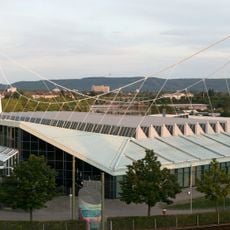
The ZKM occupies Hall A, a 312-metre former munitions factory built 1914–1918 by Philipp Jakob Manz, divided into ten atria. Since 1997 it has housed exhibition spaces, the Hertz Lab research platform, a media library and a library, plus a blue cube annex added in 1993–1997 after plans by Schweger Architects.
The ZKM was founded in 1989 by the city of Karlsruhe and the state of Baden-Württemberg; three decisions that year, from 9 May to 12 August, sealed its creation. Since 1997 it has occupied Hall A, a 312-metre munitions factory built 1914–1918 by Philipp Jakob Manz, converted from 1993 by Schweger Architects with a blue media cube echoing Rem Koolhaas's abandoned 1989 design.
The name changed in March 2016 from Center for Art and Media Technology to Center for Art and Media. The building also houses the Karlsruhe University of Arts and Design and the Municipal Art Gallery. The Media Museum examines how computers, telephones and the Internet have reshaped everyday life over the past 50 years.
The ZKM occupies Hallenbau A, a 312-metre former munitions factory divided into ten atria, so plan your route through the long building rather than expecting one central hall. The blue Cube annex marks the entrance area. The site lies southwest of Karlsruhe's centre, on the former IWKA industrial grounds that long separated the centre from neighbouring districts.
The building itself is a 312-metre-long former weapons and munitions factory, Hallenbau A, built 1914–1918 by architect Philipp Jakob Manz and divided into ten atria. A blue Cube annex recalls Rem Koolhaas's abandoned 1989 competition design for a new building south of the main station, dropped in 1992 for cost and space reasons.
The community of curious travelers
AroundUs brings together thousands of curated places, local tips, and hidden gems, enriched daily by 93,121 contributors worldwide.