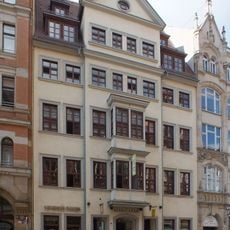
Egyptian Museum of the University of Leipzig, University museum in Leipzig, Germany
The Egyptian Museum of the University of Leipzig holds roughly 7,000 artifacts from different periods of ancient Egyptian civilization, spanning from the Paleolithic era to the Islamic period. The collection includes statues, reliefs, bronzes, sarcophagi, funerary figurines, stone vessels, and clay objects that document life across the ages.
The collection started in 1840 when a mummy sarcophagus was acquired in Trieste, and grew significantly under Egyptologist Georg Steindorff's direction. It became the largest university-based Egyptian collection in Germany.
The displays show statues, reliefs, bronzes, and funerary figurines that reveal how ancient Egyptians lived and what they valued. Visitors can observe household objects and religious items that reflect daily concerns and beliefs of that time.
The museum is located in the Kroch tower on Goethestraße 2 and is easy to find. Visitors should note that weekday hours are limited and planning ahead is helpful.
The 1840 purchase that founded the museum was a mummy-shaped coffin bought in Trieste for 289 talers by archaeology professor Gustav Seyffarth; it remains one of the collection's showpieces. Seyffarth was a pupil of Friedrich August Wilhelm Spohn, who worked on deciphering the hieroglyphs alongside Champollion and Thomas Young but died in 1824 before publishing much of his research.
The community of curious travelers
AroundUs brings together thousands of curated places, local tips, and hidden gems, enriched daily by 93,644 contributors worldwide.