St. Nicholas Church, Gothic church in Leipzig, Germany
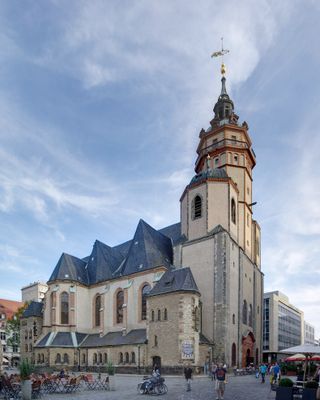
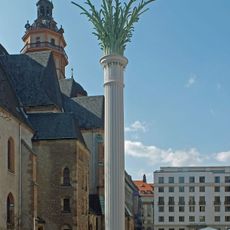
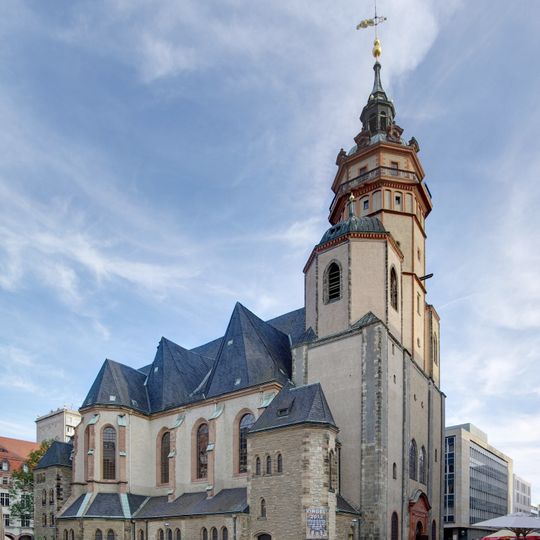
St. Nicholas Church is a large stone church in Leipzig with a tall tower on the right: a square stone lower section with a small arched window rises to an octagonal belfry with arched openings, a clock face, a balustraded gallery, and a dark domed cupola topped by a golden sphere, cross, and weathervane. The main body has pale walls with tall arched windows, buttresses, and steep dark slate roofs over several gabled sections. A stone annex bears a sign reading "OBST 2012".
Built from 1165 in Romanesque style after Leipzig gained market rights, with Romanesque masonry still visible on the west side. Silver wealth from the Ore Mountains funded the 15th- and 16th-century rebuilding into a three-aisled late Gothic hall church. On 25 May 1539 sermons by Justus Jonas the Elder and Martin Luther brought the Reformation to Leipzig, and the church became the seat of the city's first superintendent, Johann Pfeffinger.
The name honors Saint Nicholas, patron of merchants and travelers, reflecting the city's long tradition as a trading center. Today the congregation gathers for services often accompanied by organ music, continuing a musical practice rooted in centuries of worship.
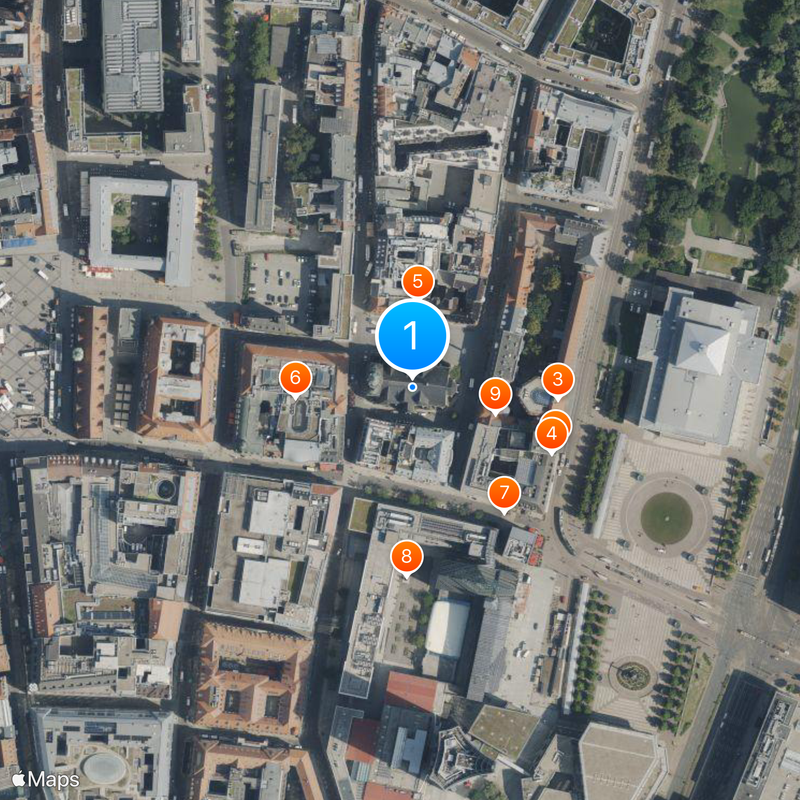
The church stands in Leipzig's Mitte district, a short walk from the Markt and the main station. The main entrance is on the west side; the neo-Gothic portal dates from 1759. The interior holds over 1,400 seats, and restoration work has continued since 1968, so parts may be screened off.
In autumn 1989 the Monday prayers held here grew into peaceful demonstrations that helped shape the transformation of East Germany. These gatherings combined worship with the desire for political change and drew thousands of participants from across the city.
The community of curious travelers
AroundUs brings together thousands of curated places, local tips, and hidden gems, enriched daily by 93,093 contributors worldwide.