Theatine Church, Catholic church in Old Town, Munich, Germany
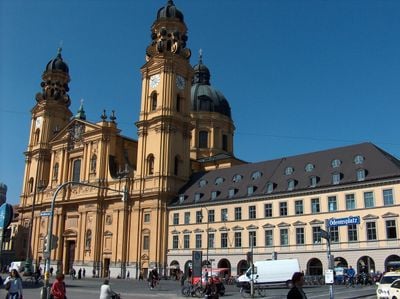
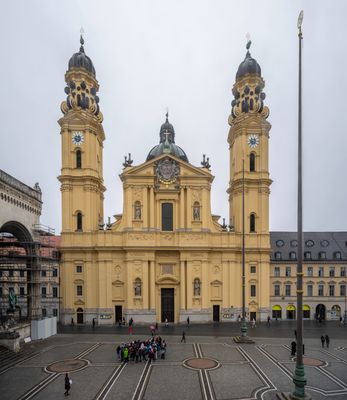
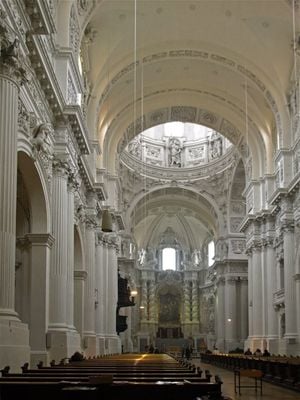
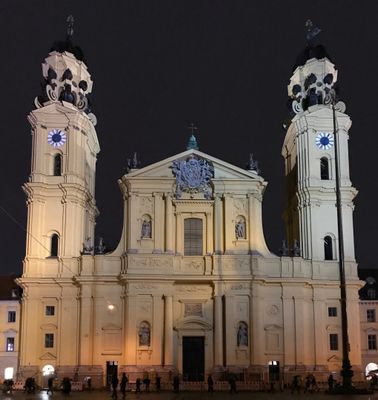
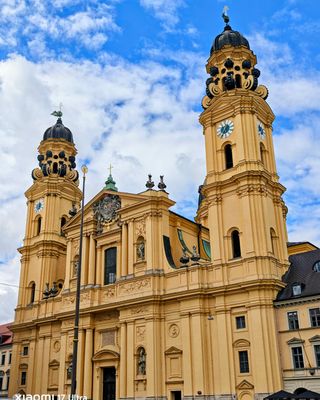
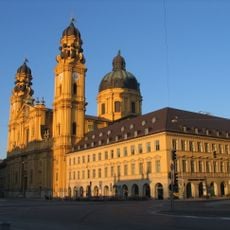
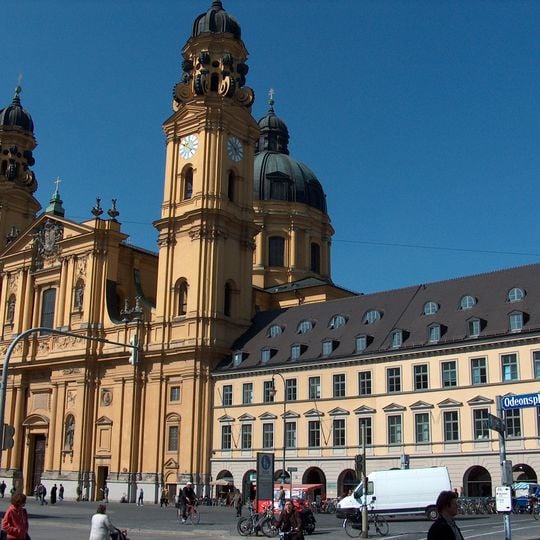
The Theatine Church of St. Cajetan and Adelaide is a Roman Catholic church on Theatinerstrasse in Munich, built in Italian High Baroque style after the model of Sant'Andrea della Valle in Rome. Its yellow stucco facade, completed in Rococo form by François de Cuvilliés the Younger in 1768, has two 65-metre towers with dark ribbed cupolas and clock faces, and a central oval dome with a coat of arms. The interior is a domed basilica on a Latin cross plan, 72.5 metres long and 28.55 metres high.
The church was founded in 1663 on commission of the elector's wife to celebrate a royal birth, designed by an Italian architect. The baroque style it introduced shaped Munich's appearance and made it a landmark of the city.
The church takes its name from the Theatine order that was entrusted with its care, reflecting the faith and power of the Bavarian court. Visitors can observe the precious interior fittings with black altars and white marble that still display baroque splendor today.
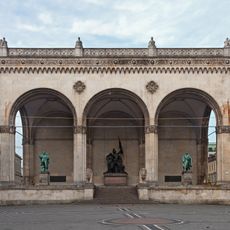
The church stands at Theatinerstraße 22, facing the paved square at Odeonsplatz, opposite the Feldherrnhalle and the Residenz. Enter through the large dark double door at the base of the central facade. The interior is a Latin-cross domed basilica; the side chapel with the tombs of King Maximilian II and Queen Marie is on one side. The nave is 72.5 m long and 15.5 m wide.
A small side chapel holds the tombs of King Maximilian II (reigned 1848–1864) and his consort Queen Marie. The church's dome lantern carries a weather vane shaped like a lion, and the two surviving statues of the Four Evangelists by Balthasar Ableithner, Mark and John, date from 1675.
The community of curious travelers
AroundUs brings together thousands of curated places, local tips, and hidden gems, enriched daily by 94,243 contributors worldwide.