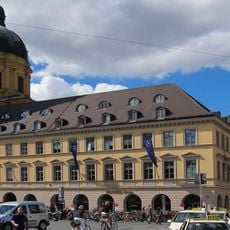
Palais Preysing, Rococo mansion in Münchner Altstadt, Germany
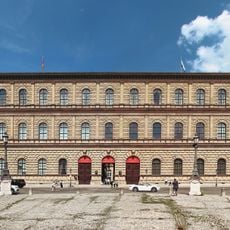
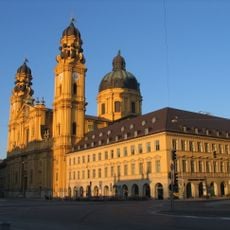
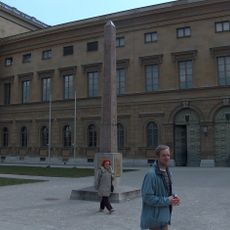
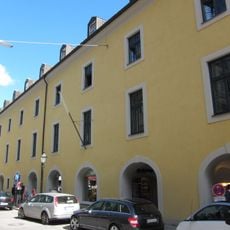
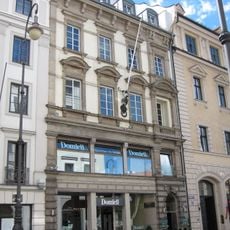
Palais Preysing is Munich's first Rococo palace, built by Joseph Effner at Residenzstraße 27 with two nine-axis street facades, colossal pilasters and a columned balcony on the east side. Its interior keeps a three-armed ceremonial staircase with stucco and caryatids; a shopping passage runs through the building.
Count Johann Maximilian of Preysing-Hohenaschau, court huntsman and tutor to Elector Karl Albrecht, had Joseph Effner build the palace in 1723–1728, after being mocked for his modest house beside the Residenz. Masons worked at night by torchlight to finish it. In 1835 the Bayerische Hypotheken- und Wechsel-Bank began operations here with 11 employees.
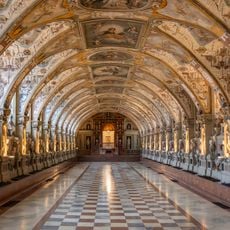
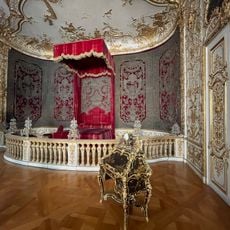
This mansion displays the ornate Rococo architecture that shaped Munich in the 18th century and remains central to the Old Town's character today. Visitors can observe the elaborate stucco details and elegant proportions that define this decorative style.
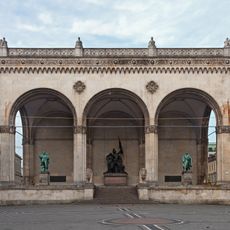
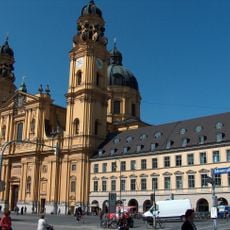
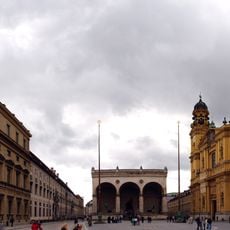
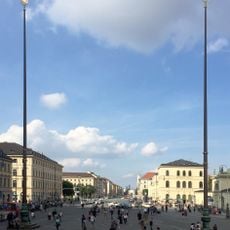
Palais Preysing stands at Residenzstraße 27, at the corner of Viscardigasse, with its west facade on Theatinerstraße and the Feldherrnhalle directly to the north. The three-arm staircase with stucco and caryatids is publicly accessible; the ground floor and the shopping passage through the building are in commercial use.
The alley behind the palace, Viscardigasse, was nicknamed "Drückebergergasse" (shirkers' alley) because passers-by detoured through it to avoid the Nazi salute required at the Feldherrnhalle, where Hitler had ordered it in tribute to those killed in the 1923 Beer Hall Putsch. In the mid-1990s a wavy stripe of gold-coloured paving stones was laid there in memory of this passive resistance.
The community of curious travelers
AroundUs brings together thousands of curated places, local tips, and hidden gems, enriched daily by 93,375 contributors worldwide.