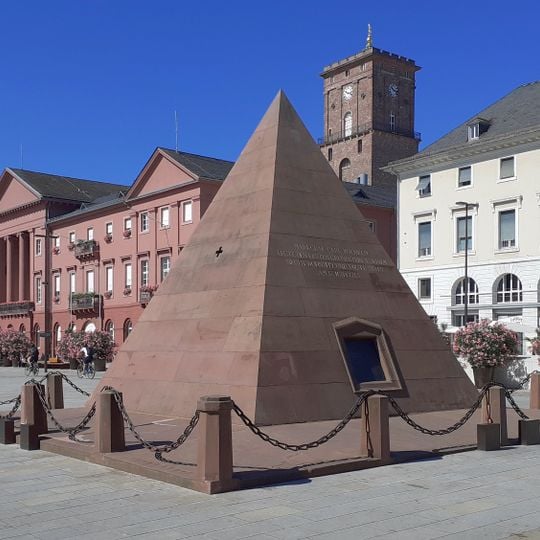
Karlsruhe Pyramid, Egyptian Revival pyramid in Karlsruhe, Germany.
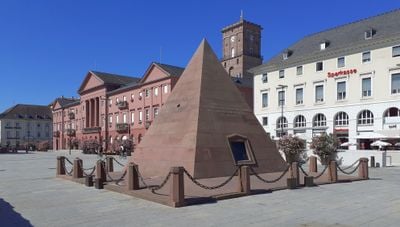
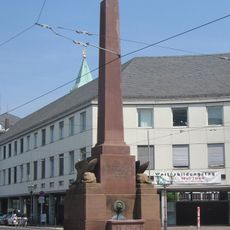
Karlsruhe Pyramid is a red sandstone burial monument on the market square, standing about 6.5 meters tall, honoring the city's founder, Margrave Charles William. Inside are several chambers, including the original burial vault, which is not normally open to visitors.
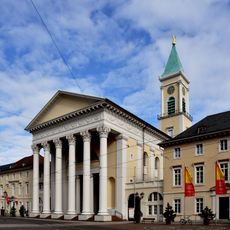
The Lutheran Concord Church stood on this spot from 1722 until its demolition in 1807, when Karlsruhe's southward growth made it an obstacle. A wooden pyramid was first placed over the founder's vault, then Friedrich Weinbrenner designed the present red sandstone pyramid, built 1823–1825. The House of Baden held rights to the monument until 1940.
The pyramid is Karlsruhe's second emblem, after the fan-shaped city layout itself. Its middle chamber holds a limestone tablet engraved with the city plan, removed for restoration and during the tram-tunnel works and put back in 2018. A small replica stands in Karlsruhe's partner city Krasnodar since 2012.
The monument sits directly on the central market square and is easy to spot and reach from any side of the plaza. Visitors can walk around the exterior at any time, but seeing inside requires special permission arranged in advance.
The pyramid survived the heavy bombings of World War II completely intact, still showing the original stonework from its construction. This makes it one of the few structures in the city that witnessed the war years without damage.
The community of curious travelers
AroundUs brings together thousands of curated places, local tips, and hidden gems, enriched daily by 94,725 contributors worldwide.