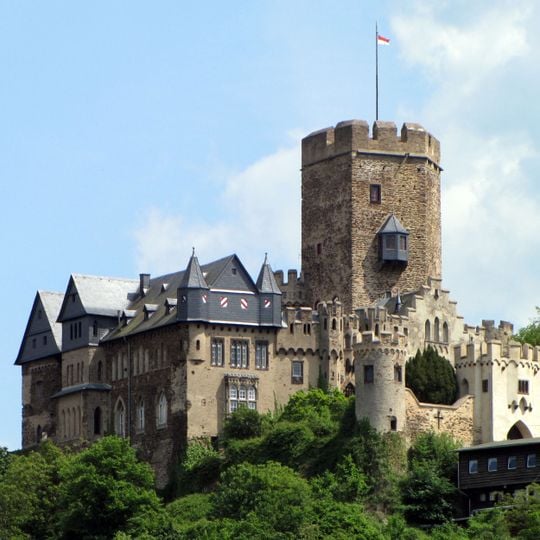
Lahneck Castle, Medieval fortress at the Rhine River, Germany
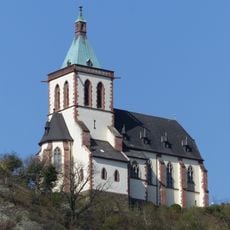
Lahneck is a fortress built on a steep rocky outcrop where the Lahn and Rhine rivers meet in Oberlahnstein. Its rectangular layout is defined by a distinctive pentagonal tower that dominates the stronghold's profile.
The fortress was founded in 1226 by Archbishop Siegfried III of Eppstein to protect his territory and the silver mine at the Lahn's mouth. It became an important defensive stronghold along one of the region's major waterways over the following centuries.
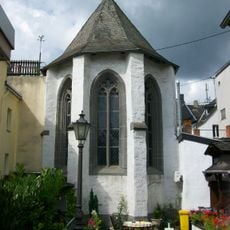
The name changed with the river: until 1365 the castle was recorded as Loynecke, after the Lahn's older name, then became Lahneck. The chapel, dedicated to Saint Ulrich, holds a copy of the 1332 letter in which Pope John XXII granted a 40-day indulgence to those attending services there; the original is kept in the Lahnstein city archive.
The castle is open to visitors at set times from April 1 to All Saints' Day, and guided tours include a climb of the roughly 29-metre keep. The first-floor living rooms are sometimes still occupied, so access follows the tour route. The site lies where the Rheinsteig, Rheinhöhenweg, Lahnhöhenweg and Jakobsweg trails meet.
The over-life-sized portrait of Queen Victoria was presented to the castle during the ownership of Count Kleist-Tychow, not acquired as part of a general collection. The castle has stayed in private hands since 1850; Admiral Robert Mischke, later commander of the battlecruiser SMS Von der Tann, bought it in 1907, and his family still owns it.
The community of curious travelers
AroundUs brings together thousands of curated places, local tips, and hidden gems, enriched daily by 93,234 contributors worldwide.