Archäologischer Wanderpfad in der Fischbeker Heide, Archaeological trail in Hamburg, Germany.
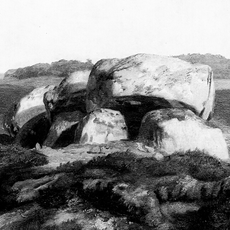
The Archaeological Trail in Fischbek Heath is a walking path with eleven information stations displaying archaeological finds and burial sites. Along the route, you see both original burial mounds and chambers alongside reconstructed ones from different periods of prehistory.
The trail was created in 1975 by the Helms Museum and documents graves from the Stone Age through the Iron Age. The site preserves the largest visible group of archaeological monuments within Hamburg's territory.
The trail's name refers to the Fischbek Heath, where visible burial monuments have drawn excavators since Gustav Schwantes dug an Iron Age urn cemetery here in the 1920s. At the megalithic site of Station 7, early medieval pottery suggests Saxons used the 3,000-year-old tomb for rituals after forced Christianization.
You can enter from the parking area near Falkenbergsweg, where the Schafstall Nature Information House serves as a guide point. Sturdy shoes are helpful, and plan enough time to read the information at each station.
At Station 7, archaeologists found the post holes and floor paving of a five-metre-long megalithic chamber. The mound also held an unusual amount of Funnel Beaker pottery, and early medieval ceramics suggest the 3,000-year-old monument was still used for pagan rites after Christianity was imposed.
The community of curious travelers
AroundUs brings together thousands of curated places, local tips, and hidden gems, enriched daily by 93,138 contributors worldwide.