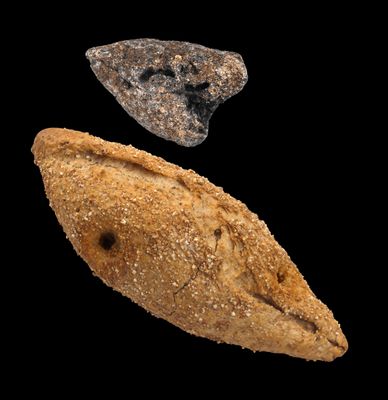
Ovelgönne bread roll, Archaeological bread find in Buxtehude, Germany
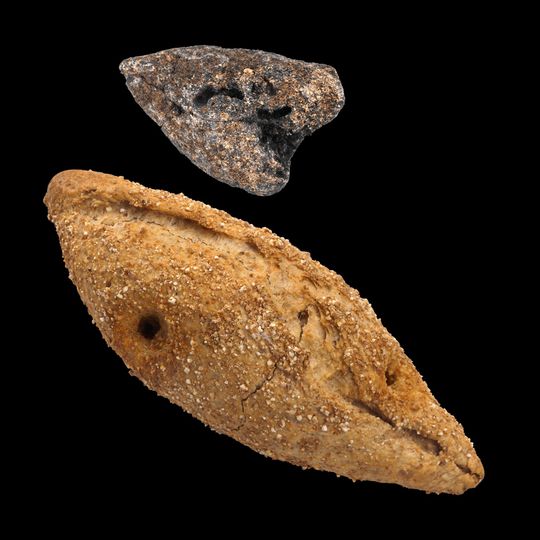
The Ovelgönne bread roll is a charred fragment of ancient bread found during excavations at a loam mine near Buxtehude, in northern Germany. The piece is small and roughly rounded, preserving the basic shape of a bread roll made more than 2,500 years ago.
Archaeologists found this piece of bread in 1952 during excavations at a loam mine and dated it to between 800 and 500 BCE, placing it in the Iron Age. It is one of the oldest preserved bread remains found in northern Germany.
The roll shows that people in this region were shaping and baking grain-based food long before written records exist for the area. Seeing the actual object, rather than a drawing or description, makes that distant daily life feel tangible.
The original fragment and a reconstruction are on permanent display at the Archaeological Museum Hamburg in Harburg. The museum holds other Iron Age finds from the region, so visiting allows you to see the bread roll alongside related objects from the same period.
When scientists examined the fragment, they found two small metal particles embedded in the dough, which were not placed there on purpose. This suggests that baking in the Iron Age involved accidental contact with metal tools or surfaces in a way that left physical traces in the food.
The community of curious travelers
AroundUs brings together thousands of curated places, local tips, and hidden gems, enriched daily by 90,738 contributors worldwide.