Karlstein, Glacial erratic in Neu Wulmstorf, Germany
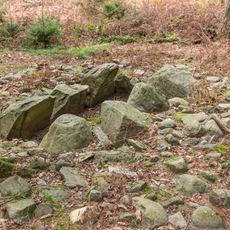
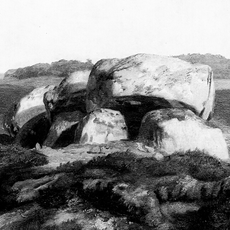
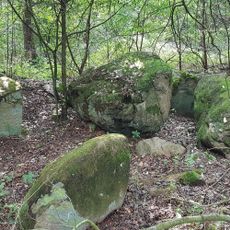
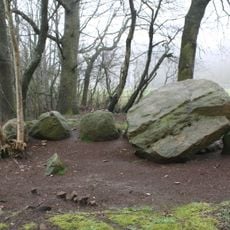
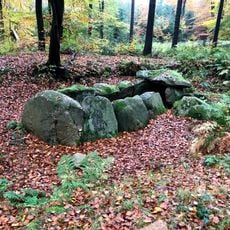
Karlstein is a glacial boulder from Scandinavia that rises prominently in Neu Wulmstorf and impresses with its size and visible surface features. The stone displays rough textures and scratches that bear witness to its long journey through the ice.
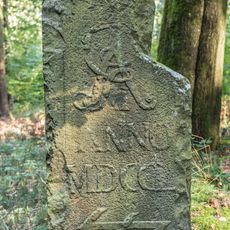
The Karlstein is a granite erratic carried from southern Sweden by ice-age glaciers and left at its present spot after the ice melted, roughly 10,000 years ago. A 1951 scientific survey found the boulder still in its original geological position. Neolithic finds at the stone — a flat axe and two flint tools — suggest it was deliberately used; the date and meaning of the horseshoes carved into it remain unknown.
The name comes from a legend linking the stone to the Frankish king Charlemagne, who is said to have split it with his sword after being woken during the Saxon Wars; the horseshoes carved into the rock are said to recall his horse and his dog's paws. The stone appears in Schwiederstorf's coat of arms.
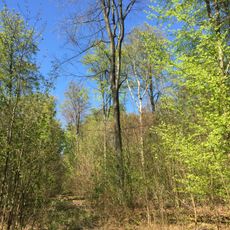
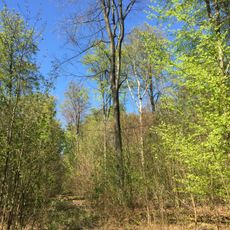
The stone lies in the Rosengarten state forest, about 1.75 km west of the Rosengarten forestry office, on a narrow wooded rise above a steep ridge north of Rosengartenstraße in the Schwiederstorf district of Neu Wulmstorf. There are no on-site information panels; the surface is uneven forest ground, so sturdy footwear helps.
The boulder's surface bears distinct scratches and grooves that are direct traces of glacier movement, appearing like a natural history book. These fine details allow visitors to comprehend the physical forces that moved the stone across thousands of kilometers.
The community of curious travelers
AroundUs brings together thousands of curated places, local tips, and hidden gems, enriched daily by 92,866 contributors worldwide.