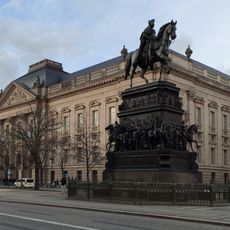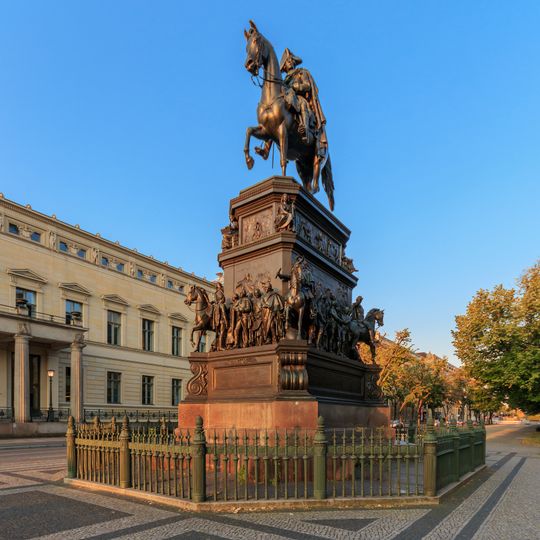
Equestrian statue of Frederick the Great, Bronze equestrian monument on Unter den Linden, Germany
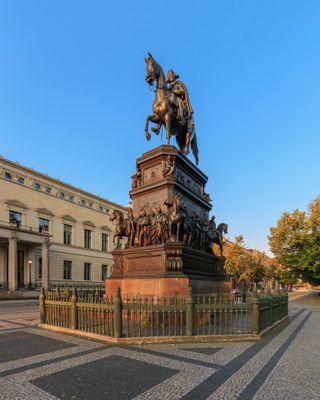
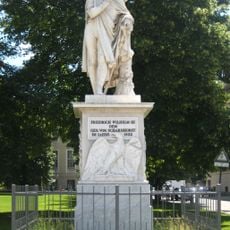
The equestrian statue of Frederick the Great is a 13.5-metre bronze monument: a 5.66-metre figure of the king in uniform and tricorne hat on the horse Condé, above a plinth 7.84 metres high. The plinth has a granite base and a bronze upper structure in three tiers: an inscription band, a middle band with 74 life-size men of Frederick's era, and an upper band of reliefs from his life with the four cardinal virtues at the corners. A low wrought-iron fence surrounds it.
Frederick William III commissioned the monument from Christian Daniel Rauch in 1839; it was cast from 1845 by Karl Ludwig Friebel and unveiled on 31 May 1851. Walled in during World War II, it was dismantled by the East Berlin authorities between 13 and 19 July 1950, re-erected at Sanssouci in 1963, and returned to Unter den Linden in 1980. After reunification it was restored to its original position, with the wrought-iron fence and 19th-century lamp posts recreated.
The figures adorning the pedestal represent generals and thinkers from Frederick's era, showing how Prussians chose to celebrate their past. Walking around the monument, you can observe which people and accomplishments were considered worthy of remembrance.
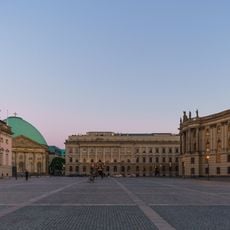
The monument sits directly on Unter den Linden between Bebelplatz and Humboldt University, making it easy to visit on foot. An iron fence surrounds the work for protection while allowing full visibility from all sides.
The monument was encased in concrete during World War II, then dismantled and removed between 13 and 19 July 1950 by order of the East Berlin Magistrat. Stored in pieces, it was nearly melted down before being re-erected at Charlottenhof Palace's hippodrome by 1962 and returned to Unter den Linden in 1980, about 6 metres east of its old spot.
The community of curious travelers
AroundUs brings together thousands of curated places, local tips, and hidden gems, enriched daily by 93,138 contributors worldwide.