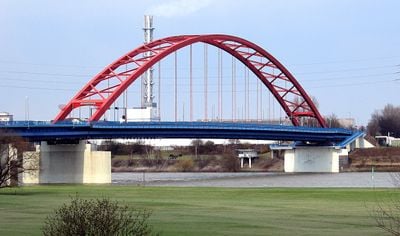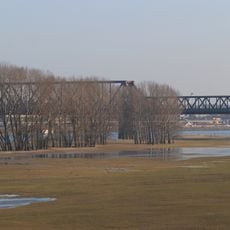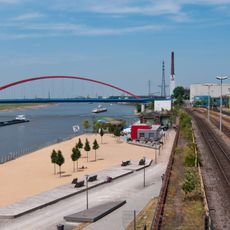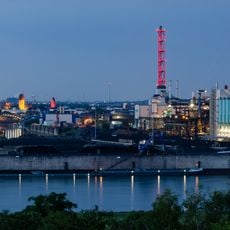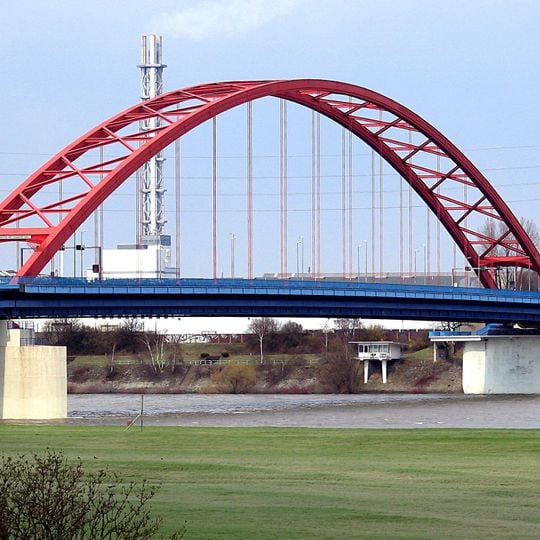
Brücke der Solidarität, Steel arch bridge in Duisburg, Germany.
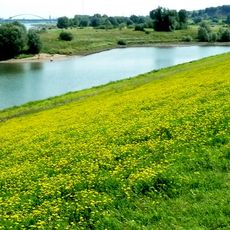
The Bridge of Solidarity is a steel arch bridge that spans across the Rhine River, connecting the districts of Rheinhausen and Hochfeld. Three traffic lanes allow vehicle movement in both directions, with the middle lane able to shift its direction based on traffic needs.
The original Admiral-Graf-Spee bridge was destroyed in 1945 and replaced by this new construction completed in 1950. The rebuilding was part of Duisburg's recovery following World War II.
The bridge received its name in 1988 when tens of thousands of steel workers marched across it to protest against factory closures. This event turned the name into a symbol of workers' struggle in the industrial region.
Pedestrian and bicycle traffic uses separate paths along the bridge, providing safe passage for non-vehicle users. The variable middle lane requires attention when crossing during peak hours, as the direction may shift to accommodate traffic flow.
The middle traffic lane functions like a traffic reversible lane and can shift direction based on demand, similar to systems in other cities. This mechanism was introduced to handle the varying flow of commuters between the two districts flexibly.
The community of curious travelers
AroundUs brings together thousands of curated places, local tips, and hidden gems, enriched daily by 91,770 contributors worldwide.