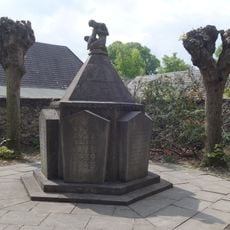
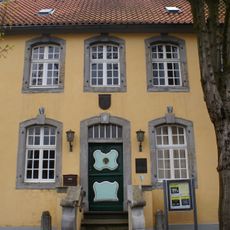
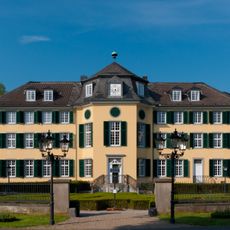
Burg Angermund, Medieval castle in Angermund, Germany
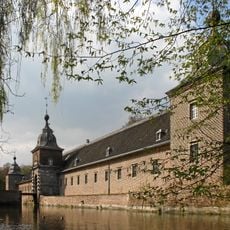
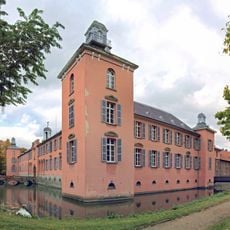
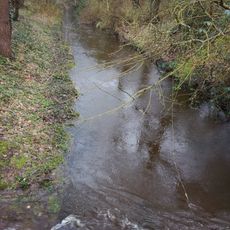
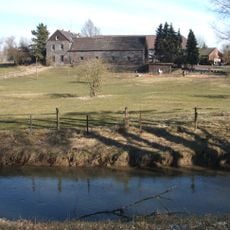
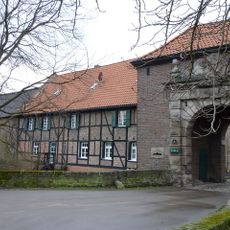
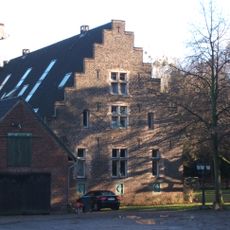
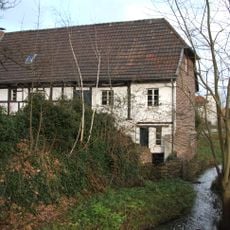
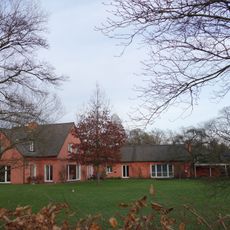
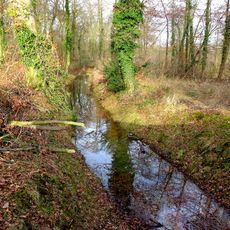
Burg Angermund is a medieval water castle in Angermund, a district in the north of Düsseldorf in North Rhine-Westphalia. The building has an oval floor plan and sits within a wide moat fed by the Angerbach river, which wraps around the entire structure.
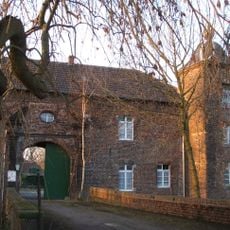
Philipp von Heinsberg, Archbishop of Cologne, bought the allodial estate in 1167 for 40 silver marks; it was first mentioned in writing as Allodium de Angermonde in 1188. In 1216 he enfeoffed it to his brother Adolf III von Berg, and after Adolf's death in 1218 Engelbert built the surviving main building and a round tower. The castle remained a Berg frontier post until 1806, then served agricultural use, and was converted into housing from 1982 to 1985.
The name does not come from a river mouth, as was long assumed, but from the Germanic word Munt, meaning protection. From the mid-14th century the castle housed the Bergisch Kellner, the official who managed the surrounding estates, and the term Kellnerei passed to the building itself. Its round tower served as a prison for political opponents, alleged witches and the Anabaptist Johannes Campanus.
The castle is privately owned and cannot be entered, but it can be seen clearly from the walking paths that run along the Angerbach. The paths around the site are flat and easy to follow on foot, so no special preparation is needed.
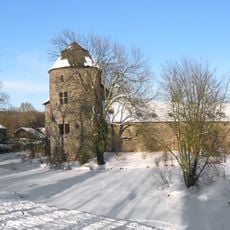
The castle's round tower, demolished in 1716, held a prison where the von Berg family confined political opponents such as the Counts of Limburg and Arnsberg, alleged witches, and the Anabaptist Johannes Campanus in the 16th century.
The community of curious travelers
AroundUs brings together thousands of curated places, local tips, and hidden gems, enriched daily by 93,874 contributors worldwide.