Burg Wevelinghoven, castle
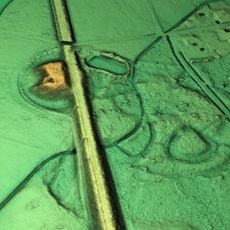
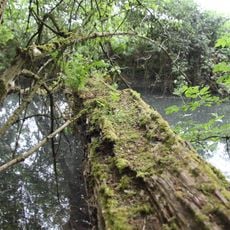
Burg Wevelinghoven, also called Motte im Zubend, is a vanished motte-and-bailey castle on the left bank of the Erft in Grevenbroich-Wevelinghoven. Its 8-metre-high mound is enclosed by a later moat and topped by a small half-timbered pavilion, both belonging to a classicist garden layout. Tree growth and shallow depressions trace a former arm of the Erft around the hill.
The von Wevelinghoven family inhabited the castle for centuries, with early records dating to 1075, and the family remained there until around 1450. The castle was likely destroyed in the late 1500s during the Cologne War and was never rebuilt afterward.
The site is named after the Lords of Wevelinghoven, first documented in 1075 and attested without gaps from 1138 until the family died out in 1450. Their castle stood here until its probable destruction in the Cologne War of 1584. The small half-timbered pavilion on the hilltop and the surrounding moat belong to a later classical garden layout, not to the medieval castle.
The hill can be explored on foot and is freely accessible, best visited during daytime hours. The site has no regular visitor facilities, so approach with respect for the archaeological monument and its natural surroundings.
The hilltop pavilion and the moat around the 8-metre mound belong to a later classical garden layout, not to the medieval castle. The surrounding trees and shallow dips in the ground still trace an old arm of the Erft, which is thought to have been cut off when the present river channel was dug by hand.
The community of curious travelers
AroundUs brings together thousands of curated places, local tips, and hidden gems, enriched daily by 93,705 contributors worldwide.