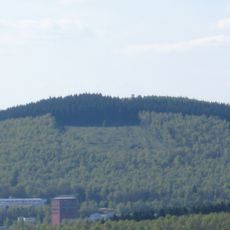
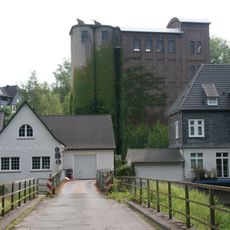
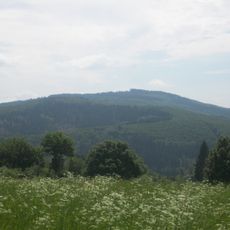
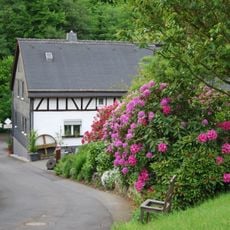
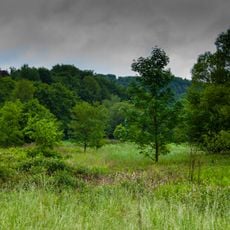
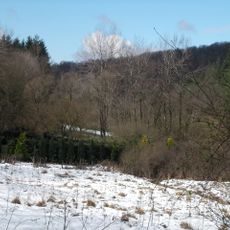
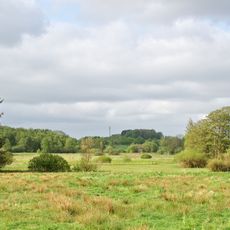
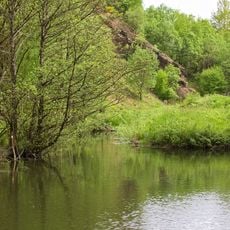
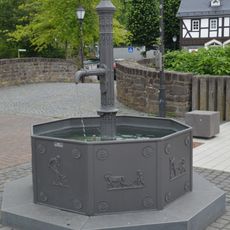
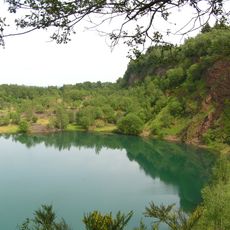
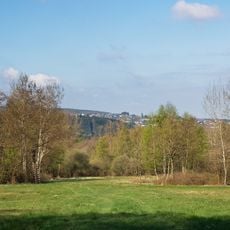
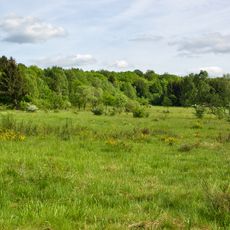
Druidenstein, Basalt geotope near Herkersdorf and Offhausen in Kirchen, Germany.
Druidenstein is a natural basalt cone in the Eifel region of Rhineland-Palatinate, rising sharply above the flat land around it. The rock is made of solidified volcanic lava, and the sides of the cone show the typical column-like formations that basalt often develops as it cools.
The basalt cone was formed by volcanic activity in the Eifel, a region with a long history of eruptions in central Europe. In the 17th century, part of the summit was deliberately removed to prevent it from being used as a military lookout point.
The name refers to druids, the Celtic priests once revered across this part of Europe, though no direct link between them and this rock has ever been proven. The formation is treated as a local landmark, and many visitors walk up to enjoy the view over the surrounding Eifel hills.
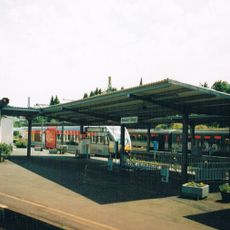
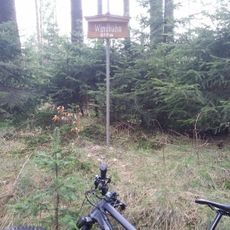
The site can be reached on foot via several hiking trails, including a circular route that starts from a nearby railway station. Sturdy footwear is a good idea, as the paths can get slippery after rain.
After a lightning strike in 1979, the rock was stabilized with six concrete support beams that are still visible today. This makes Druidenstein one of the few natural formations in Germany to have been reinforced in this way.
The community of curious travelers
AroundUs brings together thousands of curated places, local tips, and hidden gems, enriched daily by 92,637 contributors worldwide.