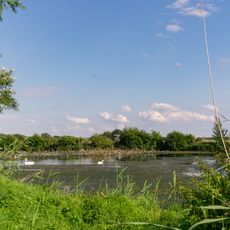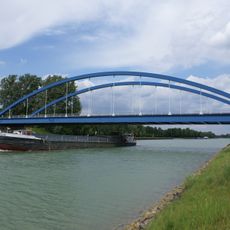
Kanalüberführung Münster-Gelmer, Navigable aqueduct in Münster-Gelmer, Germany
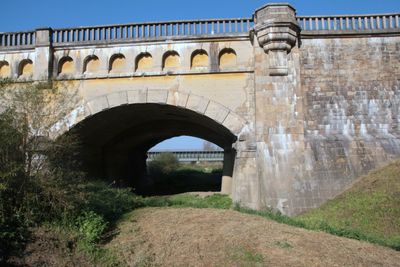
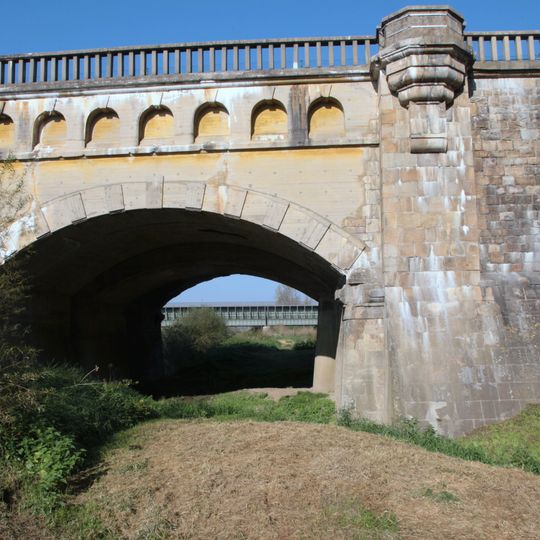
The Münster-Gelmer aqueduct is a waterway crossing that allows ships to pass over an existing river by using four stone arches to bridge the gap. The structure was built from sandstone pillars and concrete vaults that are designed to support the weight and movement of vessels crossing above.
This waterway crossing was built between 1893 and 1897 to carry the Dortmund-Ems Canal across an existing river and represented a significant engineering achievement of the time. During World War II, Allied bombing damaged the structure in 1940, leaving repair marks that remain visible on the stonework today.
The aqueduct demonstrates the engineering capabilities of late 19th-century Germany, particularly in transportation infrastructure development during industrialization.
The structure sits at the boundary between Münster and Greven and can be viewed from nearby pathways, though renovation work on the canal system may continue in the area for some years. Visitors should watch for active construction zones and plan their visit accordingly, as access may vary depending on ongoing work.
The design cleverly carries ships over an existing river rather than damming it, a solution that was quite remarkable for the era when it was built. This kind of water-carrying bridge is relatively uncommon, making this one a noteworthy example of pragmatic engineering.
The community of curious travelers
AroundUs brings together thousands of curated places, local tips, and hidden gems, enriched daily by 91,374 contributors worldwide.