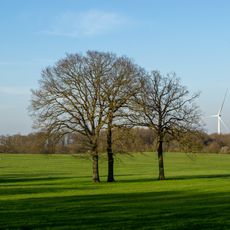
Haskenau, Medieval lowland castle in Münster-Handorf, Germany.
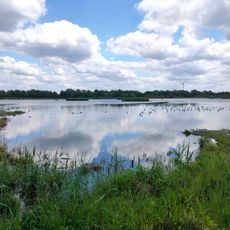
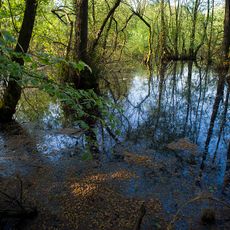
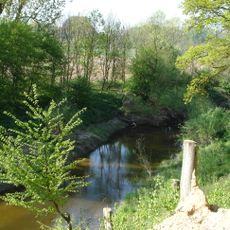
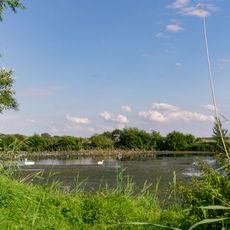
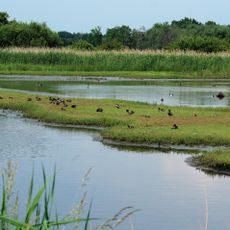
Haskenau is a medieval castle ruin in Münster-Handorf featuring earthwork fortifications and a ditch system. The structure sits at a strategic location between two rivers with preserved rampart remnants and surrounding water lines.
A settlement existed at the site in Frankish times, and Carolingian pottery shards were excavated there. In the 12th century a massive wooden or stone tower was built on a motte 30 m across and 5–6 m high, with a ditch and ramparts; a document of 1226 names knight Hermann I of Münster as resident. The fortified house was pledged in 1268 and 1286 and sold to the Münster cathedral chapter in 1324. Shards of the 12th–16th centuries show later use, and in 1611 the site appears only as a place of pig fattening.
In medieval documents the site was probably called "Sconowe" (Schönau or Hohenschönau). Four generations of the Droste zu Hülshoff family lived at the castle in the 15th and 16th centuries, including Münster's mayor Everwin II. von Droste zu Handorf. A 1611 inventory lists the former castle only as a place for pig fattening.
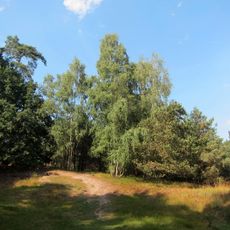
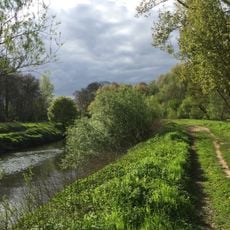
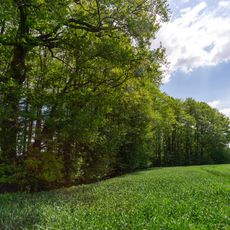
The site lies east of the Gelmer district and is accessible via pathways that connect the location to surrounding areas. Visitors should expect uneven ground since it is an archaeological site with natural terrain features.
In 1930 the author Alfred Lühl claimed the central mound was not a castle motte but a burial mound where the Roman commander Germanicus had the fallen of the Varus battle interred — a battle he placed in the Kattenvenn moor. The claim does not withstand scrutiny, yet it prompted excavations at the site in 1936.
The community of curious travelers
AroundUs brings together thousands of curated places, local tips, and hidden gems, enriched daily by 92,641 contributors worldwide.