
Grundtvig's Church
Grundtvig's Church, Expressionist church in Bispebjerg, Denmark
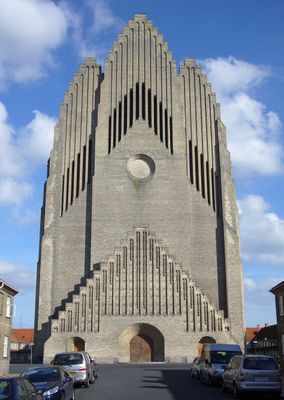
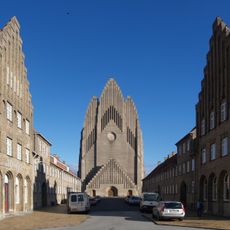
Grundtvig's Church is a brick building in Bispebjerg combining Gothic influences with expressionist design, featuring a distinctive western wall that evokes a massive pipe organ. The interior holds two organs, one with a notably large pipe that dominates the acoustic space.
A design competition in 1921 launched the project, with construction continuing through the 1930s until completion in 1940. The building emerged as a synthesis of Danish architectural heritage and new expressive forms.
The church honors Danish theologian and poet Nikolai Grundtvig, whose ideas about faith and education shaped Danish culture for generations. His name choice reflects how the building connects to local spiritual and intellectual traditions.
The location is accessible by car and public transportation, with facilities for visitors with mobility needs. Since it functions as a working place of worship, visitors should be mindful of ongoing services and maintain quiet.
The interior houses two organs, with one featuring an exceptionally large pipe reaching 11 meters. This oversized pipe element is among the longest in the Nordic region.
Location: Copenhagen Municipality
Inception: 1940
Architects: Peder Vilhelm Jensen-Klint
Official opening: September 8, 1940
Architectural style: Gothic Revival, expressionist architecture
Height: 49 m
Length: 76 m
Width: 35 m
Accessibility: Acessível para cadeira de rodas
Address: På Bjerget 5B, 2400 København NV
Opening Hours: Segunda-feira-Quarta-feira, Sexta-feira-Sábado 09:00-16:00; Quinta-feira 09:00-18:00
Phone: +4535815442
Website: http://grundtvigskirke.dk
GPS coordinates: 55.71658,12.53361
Latest update: December 13, 2025 13:32
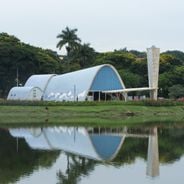
Concrete churches from different countries show the architectural evolution of the 20th century. These buildings combine geometric forms with modernist designs and use light as a design element. The structures demonstrate the technical capabilities of concrete as a construction material for...
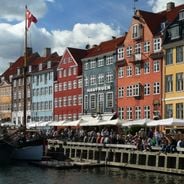
Copenhagen brings together centuries of history with recent construction in a walkable city by the water. Nyhavn lines the harbor with narrow houses painted in strong colors, where wooden ships dock beside outdoor cafes. The Little Mermaid sits on a rock at the edge of the sound, a bronze figure...
Bispebjerg
836 m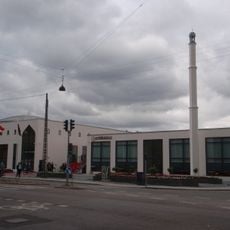
Grand Mosque of Copenhagen
1.3 km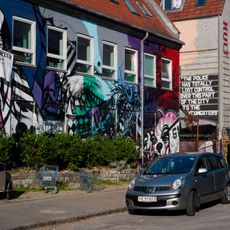
Ungdomshuset
1.1 km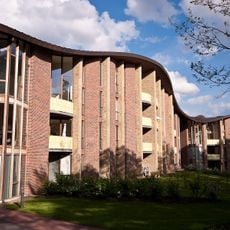
Bispebjerg Bakke
829 m
The Islamic Cultural Center in Copenhagen
1.3 km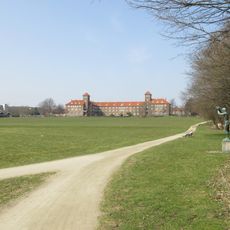
Lersøparken
1 km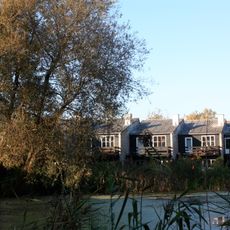
Atelierhusene
881 m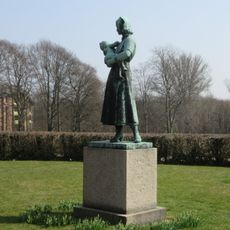
The Humane Nurse
773 m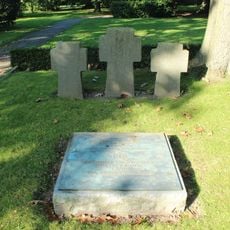
Kopenhagen Bispebjerg German war cemetery
756 m
Tauba Mosque
1 km
Spærredæmningen
936 m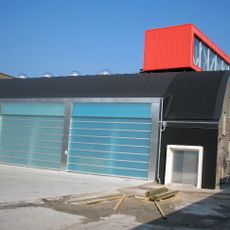
Sjakket
1.2 km
Tukak maskespil
560 m
Blomsterbakken
507 m
Dynamisk vækst
545 m
Ung mand med diskos
998 m
Reflektor
785 m
Young Girl Fixing Her Hair
1.1 km
Stemningen
649 m
Kone på kasse
525 m
Juggernaut
906 m
SNEEN SMELTER
1 km
Work of art
487 m
Statue, Work of art
254 m
Sculpture, Work of art
883 m
Work of art, sculpture
598 m
Mindeplade over Erik Hagens og Julius Grundfør
697 m
Mindeplade over redningen af de danske Jøder
362 mVisited this place? Tap the stars to rate it and share your experience / photos with the community! Try now! You can cancel it anytime.
Discover hidden gems everywhere you go!
From secret cafés to breathtaking viewpoints, skip the crowded tourist spots and find places that match your style. Our app makes it easy with voice search, smart filtering, route optimization, and insider tips from travelers worldwide. Download now for the complete mobile experience.

A unique approach to discovering new places❞
— Le Figaro
All the places worth exploring❞
— France Info
A tailor-made excursion in just a few clicks❞
— 20 Minutes