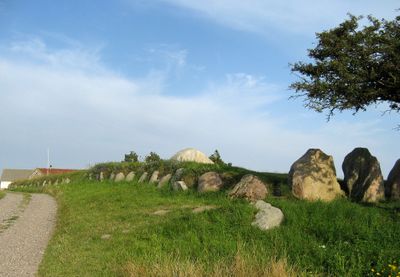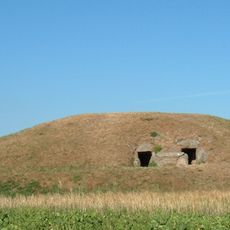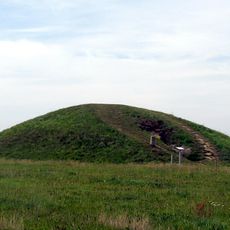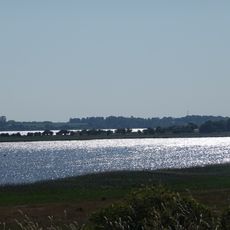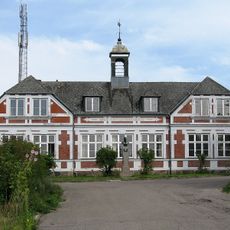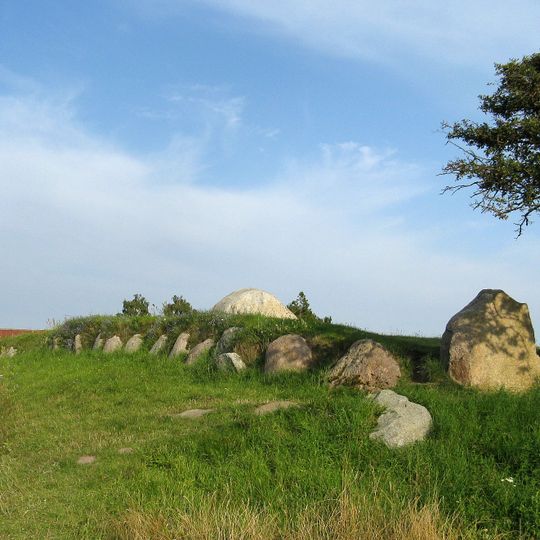
Grønsalen, Long barrow in Møn, Denmark.
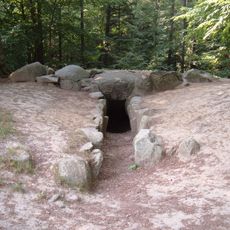
Grønsalen is a long barrow on the island of Møn with a length of about 100 meters and width of 10 meters, encircled by 134 large stones that form a complete perimeter. Inside, the mound contains separate chambers that visitors can walk through, with the whole structure rising more than a meter above the ground.
Built around 3500 BC during the Neolithic period, the monument first appeared in written records in 1186 with the name Grónesund. This long gap between its construction and earliest documentation shows how significant the site remained across thousands of years.
The burial chambers inside show how early communities placed their dead in shared spaces, reflecting how they organized themselves around death and remembrance. Walking through reveals these ancient practices in a very direct way.
The site is easy to reach on foot and the burial chambers are open for visitors to walk through and explore on their own. The grounds are outdoors and open year-round, so weather conditions will guide the best time to visit.
The name may come from an old word meaning green, though its exact origin remains unclear and debated. This naming mystery mirrors how little we actually know about who first built this place and why they chose this location.
The community of curious travelers
AroundUs brings together thousands of curated places, local tips, and hidden gems, enriched daily by 92,699 contributors worldwide.