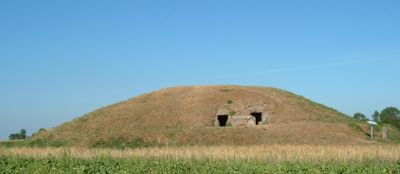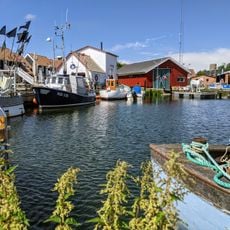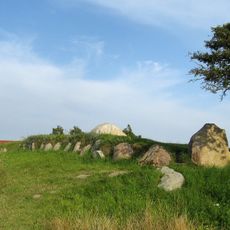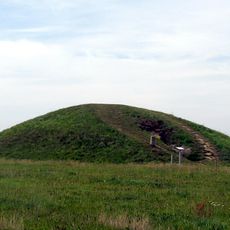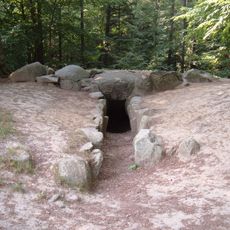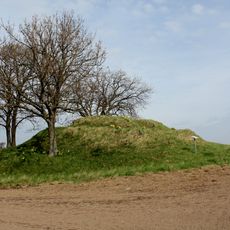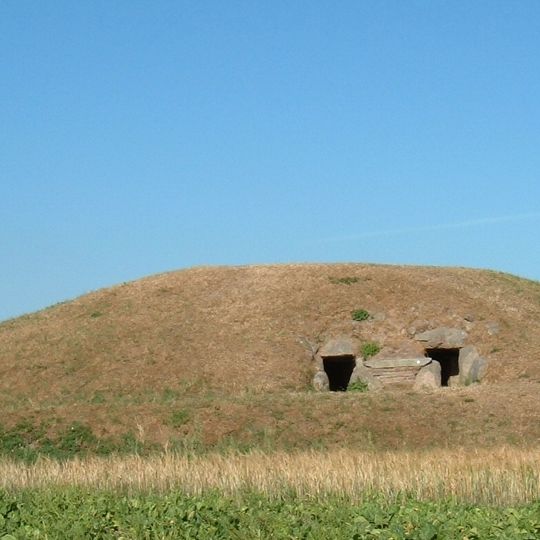
Klekkende Høj, Neolithic passage grave in Møn, Denmark.
Klekkende Høj is a Neolithic passage grave with two separate entrance tunnels that lead into a shared burial chamber. The structure uses large stones to create a central room, all covered by an earthen mound that has survived over thousands of years.
The passage grave was built during the Neolithic period when communities constructed monumental structures for burials. Eighteenth-century excavations uncovered skeletal remains and objects that confirmed the site's importance as a long-term burial ground.
The name "Klekkende Høj" means "ringing mound" and comes from the sounds produced when people walked over the stones. The site served as a communal burial ground where entire families were laid to rest in a shared sacred space.
Entering the passages requires bending down and carefully moving through tight spaces that extend several meters into the mound. Visitors should wear comfortable clothing and allow time to move slowly through the structure without rushing.
The grave features two entrance passages running parallel to each other, both oriented eastward - an unusual arrangement for tombs of this era. This dual design suggests the site served multiple burial periods or held special importance for the communities that built it.
The community of curious travelers
AroundUs brings together thousands of curated places, local tips, and hidden gems, enriched daily by 90,847 contributors worldwide.