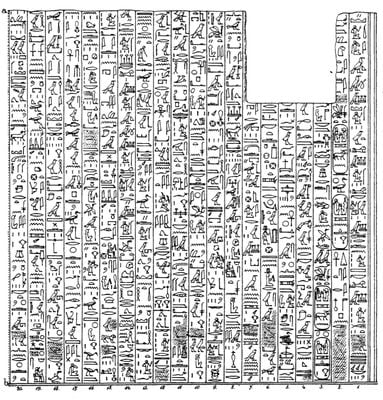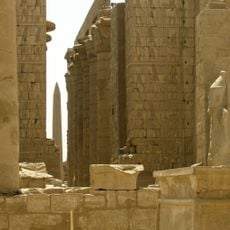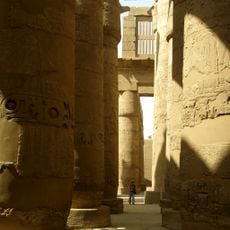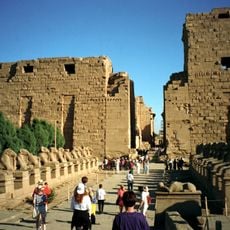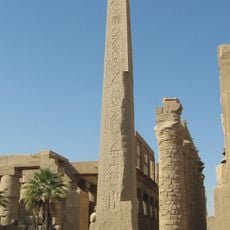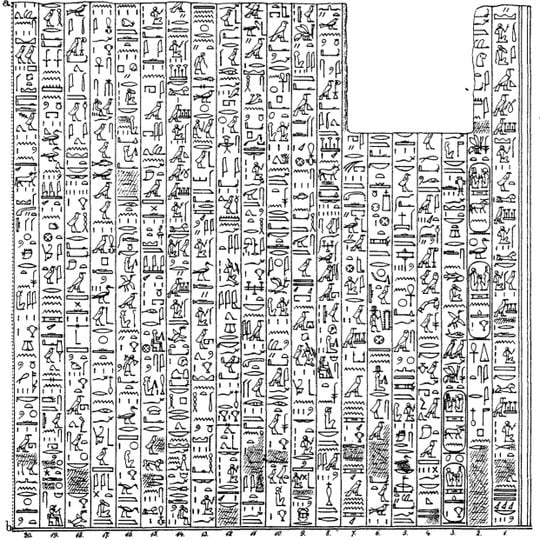
Great Karnak Inscription, Ancient hieroglyphic inscription at Karnak Temple Complex, Egypt
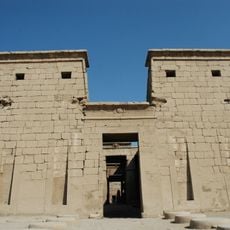
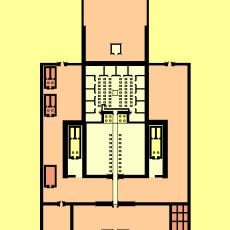
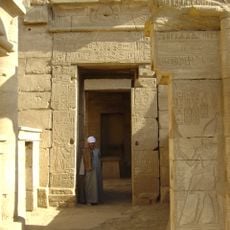
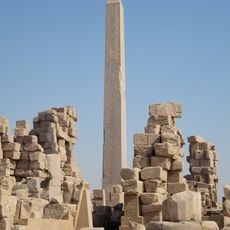
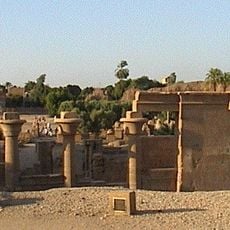
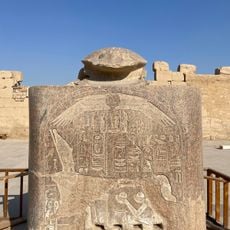
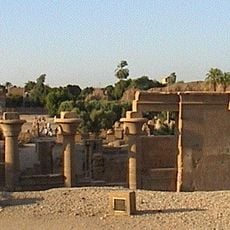
The Great Karnak Inscription is a hieroglyphic text carved along the east wall of the Cachette Court, inside the Amun-Re precinct at Karnak in Luxor, Egypt. It runs across 79 lines and occupies the stretch of wall between two of the temple's gateways.
The inscription was commissioned by Pharaoh Merneptah in the early 13th century BCE, not long after the reign of Ramesses II. It records military campaigns against several enemies who threatened the kingdom from different directions at roughly the same time.
The inscription was placed where many people would pass through the temple, making it a visible statement rather than a private record. Reading it today gives a sense of how ancient Egyptians used writing as a public display of royal power and divine favor.
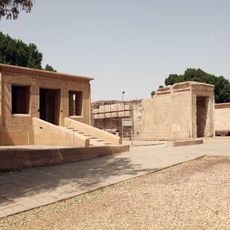
The inscription sits inside the Karnak temple complex, which is large and can take some time to navigate on foot. It helps to head first toward the Cachette Court within the Amun-Re precinct and then look for the east wall once you are in that area.
The text contains one of the earliest known written references to a group from the eastern Mediterranean that rarely appears in official Egyptian records. This detail has kept scholars debating for generations, as it sheds light on how Egypt perceived and named foreign peoples at that time.
The community of curious travelers
AroundUs brings together thousands of curated places, local tips, and hidden gems, enriched daily by 91,661 contributors worldwide.