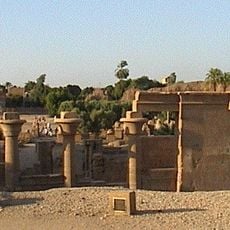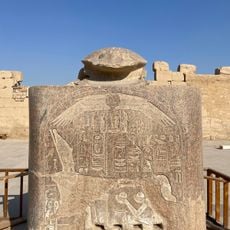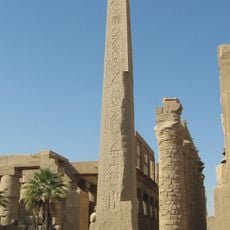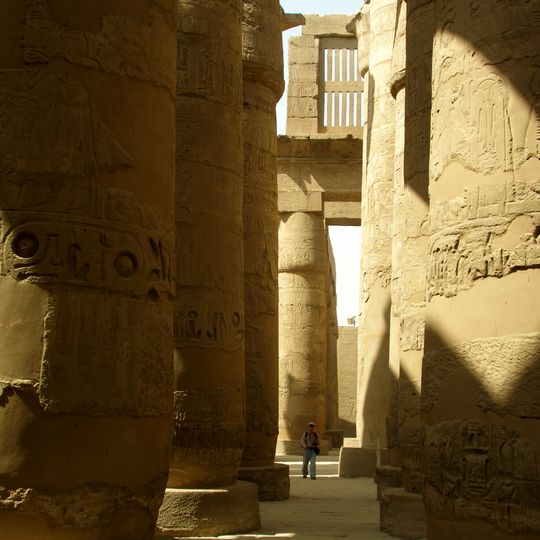
Great Hypostyle Hall, Ancient monument in Karnak Temple Complex, Egypt.
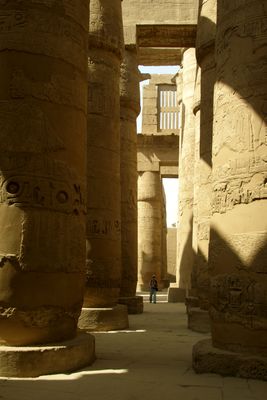
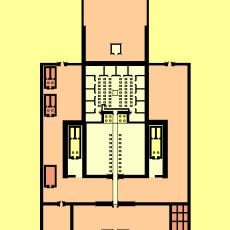
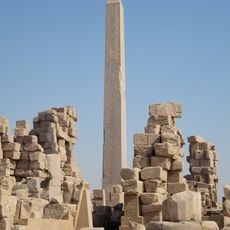
The Great Hypostyle Hall is an ancient stone structure within the Karnak complex, consisting of 134 sandstone columns arranged in 16 rows, with the twelve central columns being the tallest. The columns support massive stone slabs that formed the roof, and the entire space covers an area of roughly 5,000 square meters.
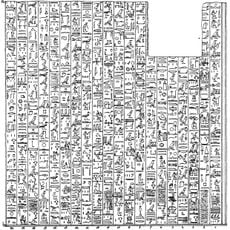
Seti I began construction around 1290 BCE as part of his expansion of the Amun precinct, and his son Ramesses II completed the work by adding the outer rows of columns. Both rulers had their names and deeds carved into the columns and walls, turning the hall into a political and religious record of their reigns.
The columns carry inscriptions and reliefs showing ritual scenes between pharaohs and deities, especially Amun-Re and his divine family. Visitors can still see traces of the original paint layer on some protected sections of the capitals, where red, blue and gold tones have survived.
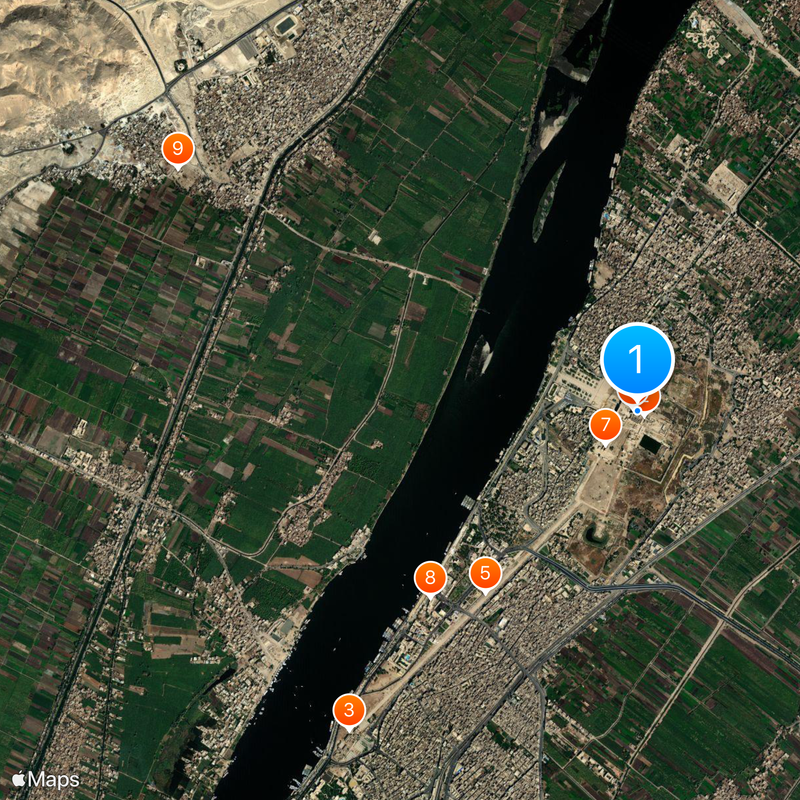
Access is from the main temple axis, and the hall sits between the second and third pylons, making orientation straightforward. The floor surface is uneven with large stone slabs, so sturdy footwear is recommended, and shade between the columns offers relief from midday sun.
Eleven of the largest columns collapsed in 1899 when groundwater destabilized the foundations, and French archaeologist Georges Legrain led a three-year reconstruction effort. His team raised the columns again using wooden scaffolding and ropes, a technical achievement that was remarkable with the tools of the time.
The community of curious travelers
AroundUs brings together thousands of curated places, local tips, and hidden gems, enriched daily by 91,608 contributors worldwide.