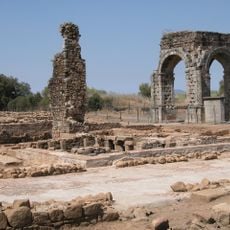
Cáparra, human settlement in Guijo de Granadilla, Cáceres Province, Extremadura, Spain
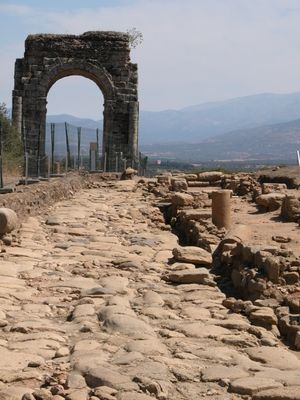
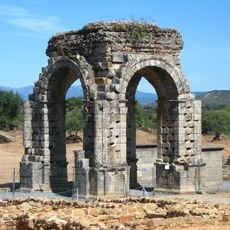
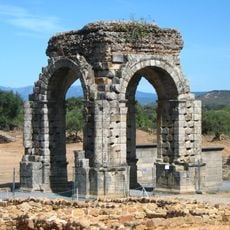
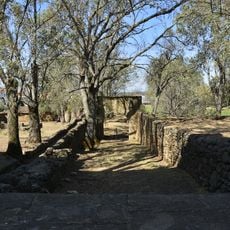
Cáparra is a Roman settlement in Lusitania whose remains are scattered across a large area today. The ruins reveal foundations of homes, shops, and public buildings that show the original city layout, including a significant triumphal arch with four pillars at the crossing of the two main streets.
Cáparra began as a pre-Roman Vetón city and was later elevated to Roman municipium status under Emperor Vespasian around 74 AD, granting its inhabitants Roman citizenship. The city thrived as a key junction on the Vía de la Plata, the main road connecting Augusta Emerita with Asturica, until it declined in significance during later centuries.
The name Cáparra comes from the pre-Roman Vetón people and was later latinized under Roman rule. Visitors can read from the ruins today how this place functioned as a central hub for trade and administration of the surrounding countryside.
The site is easily reached from the A66 highway, with signage near Guijo de Granadilla or Villar de Plasencia. On-site paths lead through the ruins and an interpretation center provides information to help you understand the layout.
The tetrapylum of Cáparra is the only one of its kind in Spain, standing about 13 meters high with four pillars supporting four arches. Ancient inscriptions on the arch were likely dedicated to stone sculptures placed on pedestals at its sides.
The community of curious travelers
AroundUs brings together thousands of curated places, local tips, and hidden gems, enriched daily by 60,000 contributors worldwide.