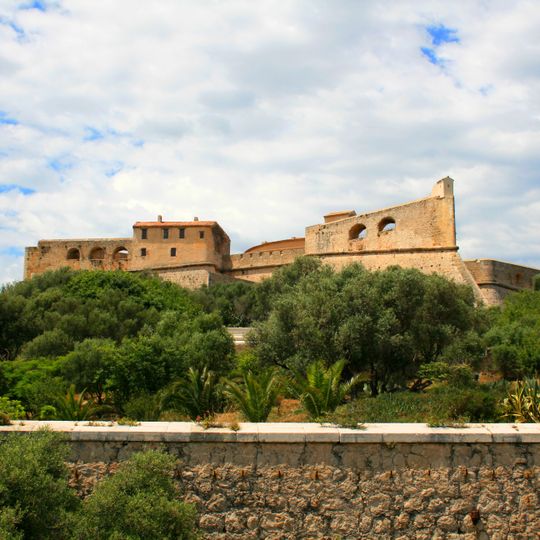
Fort Carré, Military fort in Antibes, France
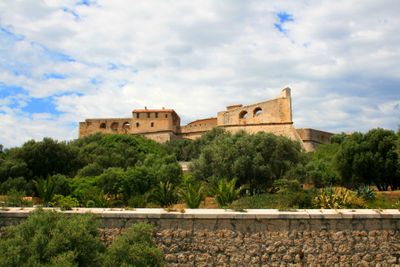
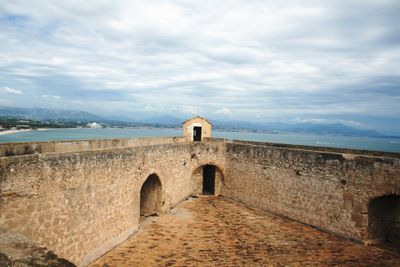
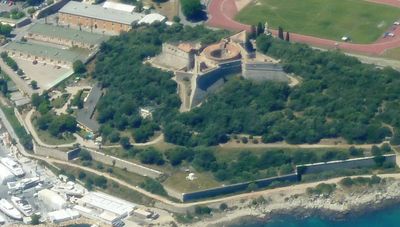
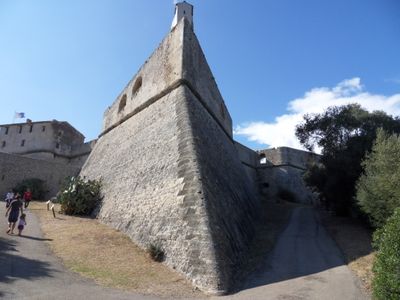
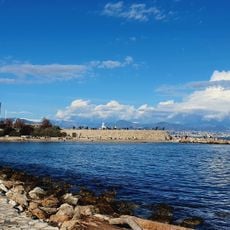
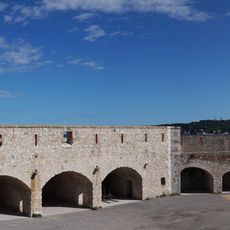
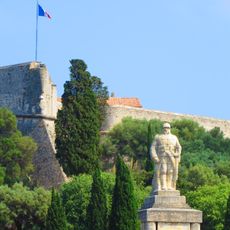
Fort Carré is a fortified stronghold in Antibes built on a rocky promontory and dominated by four arrow-shaped bastions that form a distinctive star configuration above the Mediterranean coast. The structure was designed as a defensive military installation to guard the French borders.
The fortification was commissioned by King Henry II in 1553 to defend the French border against threats from the County of Nice. It served as a crucial defensive position along the frontier for centuries.
The fort takes its name from a chapel that previously stood on this location before military construction transformed the site. Walking through today, visitors can still sense the layers of different purposes the place has served over the centuries.
The fort can be reached on foot via a pathway that starts from the waterfront and leads to the entrance. Visitors should wear sturdy shoes as the climb is steep and the stairways inside narrow and demanding in places.
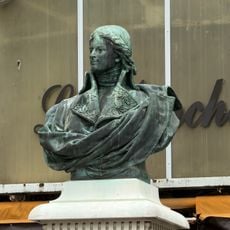
Napoleon Bonaparte was imprisoned here for ten days in 1794 during the political upheaval of the French Revolution. This brief captivity is an overlooked chapter in his rise to power.
Location: Antibes
Inception: 1553
GPS coordinates: 43.59028,7.12722
Latest update: December 6, 2025 16:04
The French Riviera offers numerous sites beyond the main tourist routes. Medieval hilltop villages such as Èze and Saint-Paul de Vence perch above the coast, while historic fortifications like Fort Carré in Antibes preserve the region's maritime past. Villa Ephrussi de Rothschild on Saint-Jean-Cap-Ferrat and Château Grimaldi in Cagnes-sur-Mer display architectural styles from different eras. The region extends from the coastline to the backcountry. The Îles de Lérins off Cannes are accessible by ferry, Col de la Bonette reaches 9,193 feet (2,802 meters) elevation, and Vallée des Merveilles in the Mercantour preserves prehistoric rock carvings. Hiking trails cross Parc national du Mercantour and follow the coast at Cap d'Ail. The Gorges du Verdon to the north form one of Europe's deepest canyons. Museums in Nice focus on Marc Chagall, Henri Matisse and Asian art. The Musée de la Mer on Île Sainte-Marguerite documents the island fortress's history. Smaller towns like Tourrettes-sur-Loup and Le Cannet lie a few miles from the coastal cities. Lac de Saint-Cassien near Montauroux provides water sports in a rural setting.
The Provence-Alpes-Côte d'Azur region depicts a land where architecture narrates a thousand years of history between sea and mountains. From the 12th-century Cistercian abbeys to the brutalist experiments of Le Corbusier, this area features an exceptional built heritage shaped by Mediterranean light. You can find fortresses perched on rocky promontories, Romanesque monasteries where Van Gogh depicted his struggles, and contemporary museums that interact with the blue of the Mediterranean. Vineyards contain large-scale sculptures, the perched villages of Luberon display their medieval architecture in light stone, and Belle Époque villas in Cap d'Antibes mark the golden age of the Riviera. Between the limestone cliffs of the Calanques and the alpine valleys carved with prehistoric signs, Provençal architecture follows the contours of the land, capturing shadow and warmth, blending tradition and modernity. From the port of Marseille to the hanging gardens of Èze, each building bears the mark of a region where Cistercian builders, military engineers, visionary artists, and contemporary architects have inscribed their visions in stone, concrete, and landscape.
Between the ramparts of the old town and the pines of Cap d'Antibes, this seaside resort on the French Riviera preserves an architectural heritage spanning eight centuries. Grimaldi Castle, a 12th-century fortress turned Picasso’s first museum in 1946, overlooks the seafront from Place du Safranier. Further south, Fort Carré stands with its four bastions on a 26-meter-high (85 ft) rocky promontory, built in 1565 to defend the border between France and the Duchy of Savoy. Cap d'Antibes features about twenty residences built from the late 19th century through the interwar period. Villa Eilenroc (1867) covers 27 acres with French-style gardens and a rose garden facing the sea. Château de la Croë (1927) once hosted the Duke of Windsor and is now a private estate. Notable visitors included Anatole France, who resided in Villa Soleil, and Karl Lagerfeld in the 1990s. Villa Thuret, established in 1857 by botanist Gustave Thuret, currently hosts a research garden of the INRAE with 2,500 plant species suited to Mediterranean conditions. Modernist architecture is represented by Villa Aujourd'hui (1938), a rare example of geometric design from the 1930s on the Côte d'Azur.
The Provence-Alpes-Côte d'Azur region combines medieval villages, historical fortifications, and natural areas between the Mediterranean coast and the Alps. The landscape ranges from the lavender-covered plateaus of Valensole to the steep limestone cliffs of the Calanques and alpine passes above 8,900 feet (2,700 meters). Geological formations like the mushroom-shaped Demoiselles Coiffées de Théus and the reddish sandstone rocks of Annot show millions of years of natural shaping. Monasteries such as Abbaye de Sénanque and Thoronet Abbey preserve Cistercian architecture, while villages like Gordes and Les Baux-de-Provence maintain their medieval layouts. The coastal settlements of Èze, Menton, and Gourdon sit on rocky perches above the Côte d'Azur, their narrow streets leading to viewpoints overlooking the sea. The Lérins Islands off Cannes and the Îles d'Hyères offer quieter coastal landscapes with Mediterranean vegetation. Inland, hiking trails like Sentier Martel pass through the Verdon Gorge, while the Vallée des Merveilles displays prehistoric rock engravings in an alpine setting. Fortifications including the Citadelle de Sisteron, Fort Carré in Antibes, and the ruins of Fort de Buoux document centuries of military history at strategic passages and heights.
Picasso Museum
1.1 km
Plage de la Gravette
863 m
Antibes Cathedral
1 km
Chapelle Saint-Bernardin d'Antibes
976 m
Château Grimaldi
1.1 km
Enceinte gréco-romaine d'Antibes
1.1 km
Tour Grimaldi
1 km
Musée Peynet
1 km
Chapelle Saint-Esprit d'Antibes
1 km
Bastion Saint-Jaume
666 m
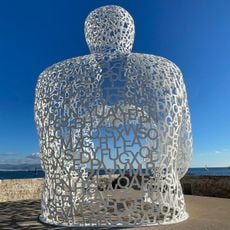
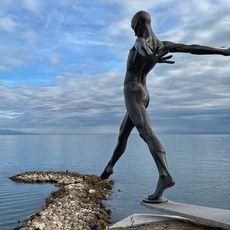
Nomade
655 m
Cathédrale Notre-Dame-de-la-Platea, chapelle Saint-Esprit et tour Grimaldi
1 km
Night Fishing at Antibes (replica)
1.4 km
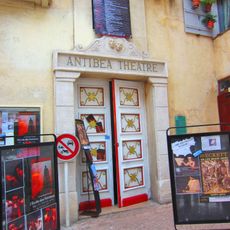
Theâtre Antibéa
978 m
Museum of postcards
979 m
Église Réformée, Antibes
1.3 km
Église Saint-Joseph, Antibes
1.2 km
Église Notre-Dame-de-l'Assomption d'Antibes
1.3 km
Absinthe Museum
1.1 km
Chapelle Saint-Roch, Antibes
667 m
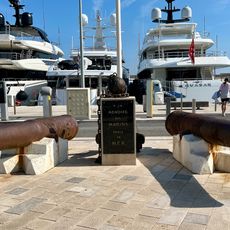
Monument aux Morts
88 m
Monument aux Morts, Antibes
1 km
Chapelle Saint-Sauveur, Antibes
1.1 km
Marché Provençal, Antibes
1 km
Chapelle Saint-Laurent
8 m
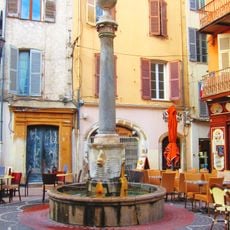
Fontaine et colonne romaine, Antibes
967 m
Plage du port
726 m
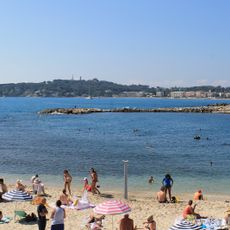
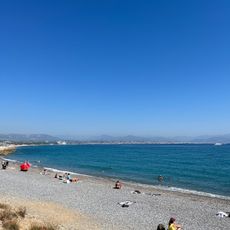
Plage du Fort Carré
363 mReviews
Visited this place? Tap the stars to rate it and share your experience / photos with the community! Try now! You can cancel it anytime.
Discover hidden gems everywhere you go!
From secret cafés to breathtaking viewpoints, skip the crowded tourist spots and find places that match your style. Our app makes it easy with voice search, smart filtering, route optimization, and insider tips from travelers worldwide. Download now for the complete mobile experience.
A unique approach to discovering new places❞
— Le Figaro
All the places worth exploring❞
— France Info
A tailor-made excursion in just a few clicks❞
— 20 Minutes