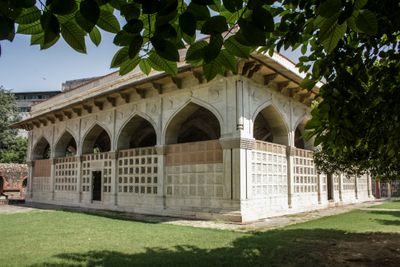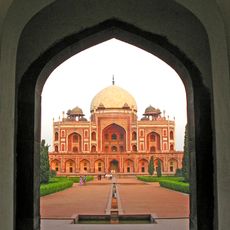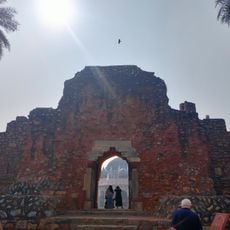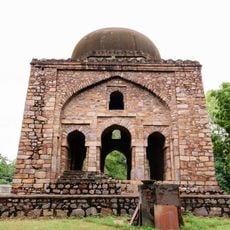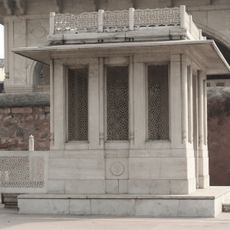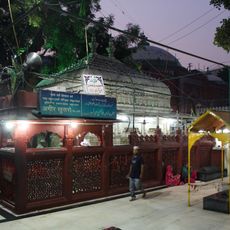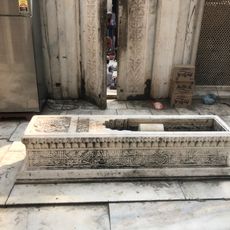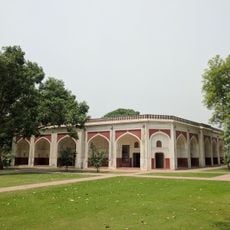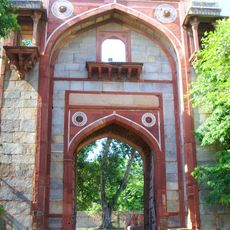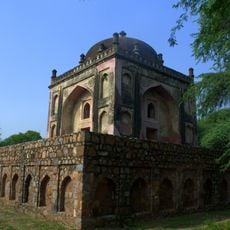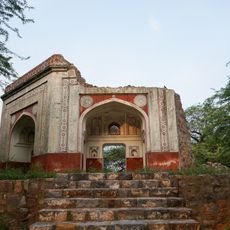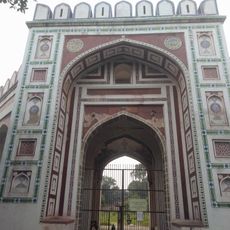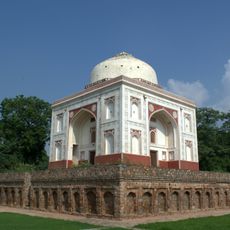
Chausath Khamba, Marble tomb in Nizamuddin, India.
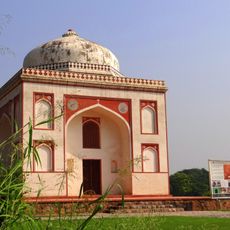
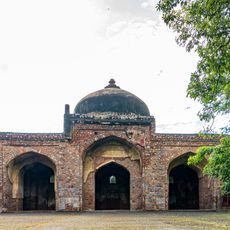
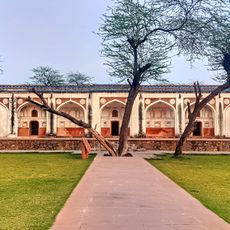
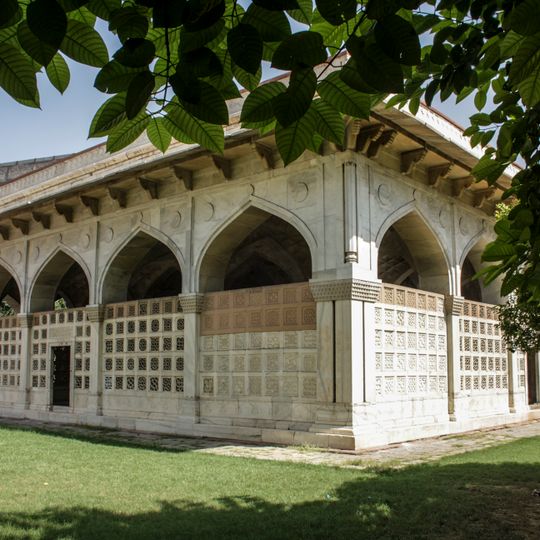
Chausath Khamba is a white marble tomb in South East Delhi, built entirely from that material with sixty-four columns arranged in a regular grid supporting twenty-five bays. The columns stand close together and create an open, latticed structure that gives the building a strong geometric appearance from every angle.
The tomb was built in 1623 for Mirza Aziz Koka, who was the foster brother of Mughal Emperor Akbar and held one of the highest positions at the imperial court. It was placed near the shrine of Hazrat Nizamuddin Auliya, a sacred site that had already drawn pilgrims for several centuries by that time.
The name translates from Hindi as "sixty-four columns," a direct reference to what you see the moment you step inside. The marble lattice screens that fill the spaces between the columns are carved in geometric patterns, a common feature of Mughal funerary architecture that visitors can study up close.
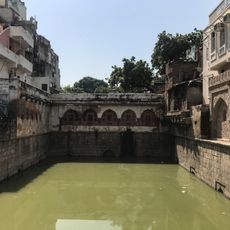
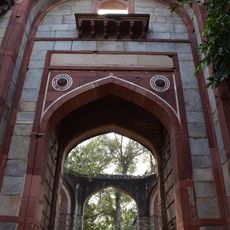
The building sits directly beside the shrine of Hazrat Nizamuddin Auliya in a lively part of old Delhi, reached through a large sunken courtyard with an arched entrance. It is worth setting aside extra time, as several other historic structures stand close by and the surrounding lanes are full of activity.
Although the building appears to have a flat roof from the outside, twenty-five domes are hidden entirely within the roof structure and cannot be seen from the street. This approach is rare among Mughal tombs of the same period, most of which display their domes openly above the roofline.
The community of curious travelers
AroundUs brings together thousands of curated places, local tips, and hidden gems, enriched daily by 90,886 contributors worldwide.