Ponte Duca d'Aosta, Road bridge and national heritage structure in Flaminio district, Rome, Italy
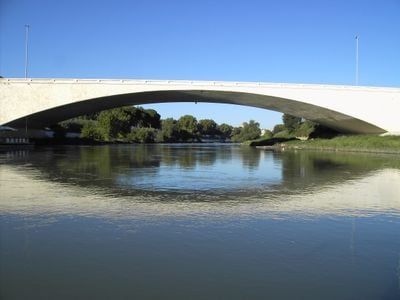
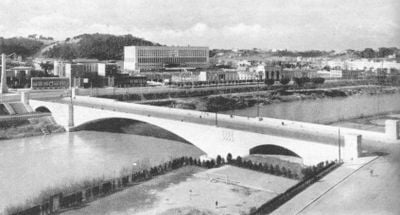
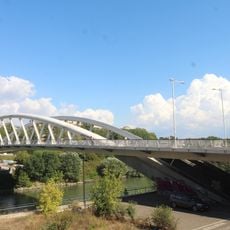
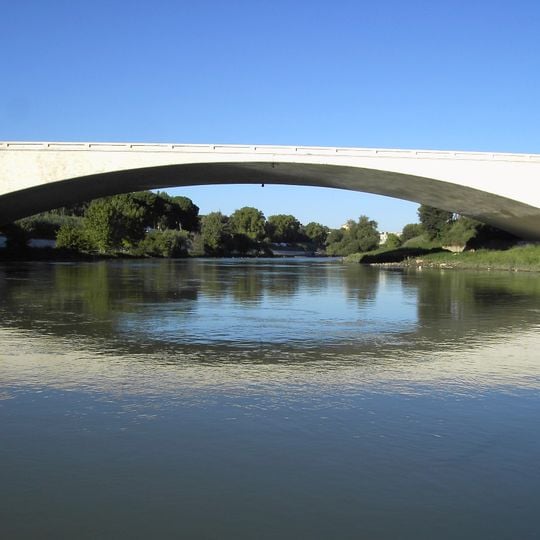
Ponte Duca d'Aosta spans the Tiber River for about 220 meters with three arches, the central one reaching roughly 100 meters across. The bridge connects Lungotevere Flaminio to Piazza Lauro De Bosis and serves both vehicle and pedestrian traffic.
Construction began in 1936 under architect Vincenzo Fasolo and the bridge opened to traffic in March 1939. Its creation occurred during a period of major urban transformation in Rome before World War II.
Four marble pillars stand at the corners with detailed relief carvings showing battle scenes from World War I. These monuments honor the conflicts that took place at the Sile, Piave, Tagliamento, and Isonzo rivers.
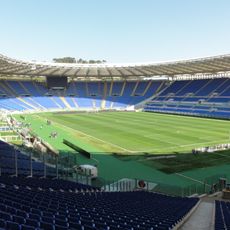
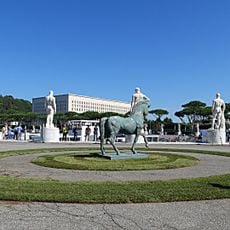
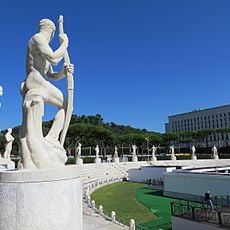
The bridge is accessible to both cars and pedestrians, connecting the Flaminio district directly to the Foro Italico sports complex. Lungotevere Flaminio is the most straightforward starting point for crossing.
The structure blends reinforced concrete with travertine stone cladding, showing how traditional materials merge with modern engineering techniques. Decorative elements honor Prince Emanuele Filiberto of the Savoy-Aosta family.
The community of curious travelers
AroundUs brings together thousands of curated places, local tips, and hidden gems, enriched daily by 90,739 contributors worldwide.