Ponte Milvio, Roman bridge in northern Rome, Italy
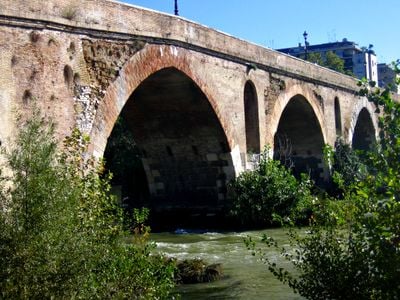
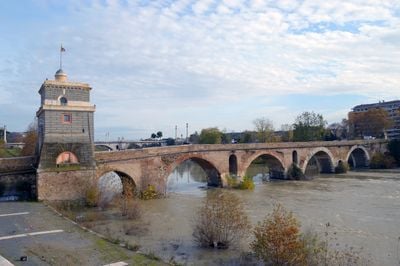
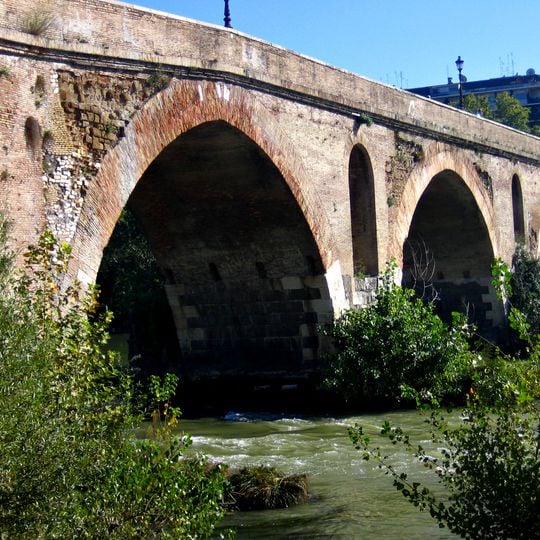
Ponte Milvio carries the Via Flaminia over the Tiber in northern Rome. Of the ancient Roman bridge, three central arches remain, built of pale tan and beige brick with patches of darker masonry; the piers above the water are faced with large grey stone blocks. A flat stone string course runs beneath a low parapet, and a square neoclassical tower stands at the northern entrance.
Construction began in 206 BC under Gaius Claudius Nero and served as an important crossing on the Via Flaminia. In 312 the battle between Constantine and Maxentius took place here, paving the way for Constantine's rule over the Roman Empire.
Ponte Milvio is nicknamed Ponte Mollo because it is the first bridge submerged when the Tiber floods. Since the 2006 film Ho voglia di te, couples have attached padlocks to its lampposts and thrown the keys into the river; the city removed all locks in 2012. The area is now an evening gathering place for young Romans.
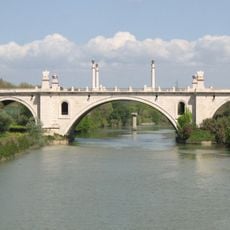
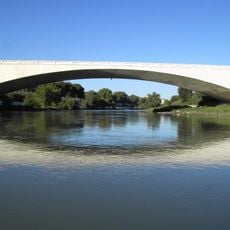
Vehicular traffic was cut sharply in 1951 when the nearby Ponte Flaminio opened and was banned entirely in 1978, so the crossing is now for pedestrians. The bridge links piazzale Cardinal Consalvi, between the Flaminio and Parioli districts, to piazzale di Ponte Milvio, shared by Della Vittoria and Tor di Quinto. City bus lines serve it; the Roma Nord railway runs nearby.
The stones carry visible traces of restoration work from the 18th century, when Giuseppe Valadier and Domenico Pigiani renewed parts of the structure. Some arches show layers of stone that do not align perfectly, pointing to different construction phases over more than two millennia.
The community of curious travelers
AroundUs brings together thousands of curated places, local tips, and hidden gems, enriched daily by 93,333 contributors worldwide.