Taisetsu Dam, Rock-fill dam in Kamikawa, Japan
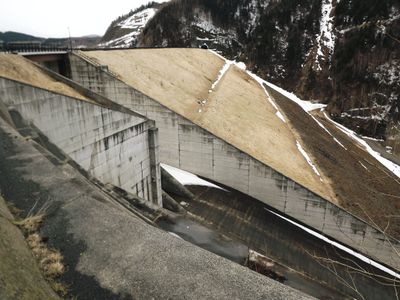
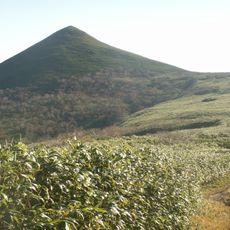
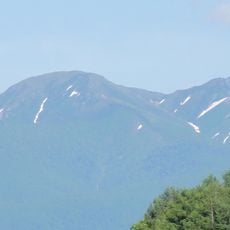
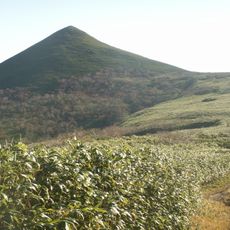
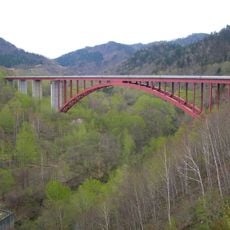
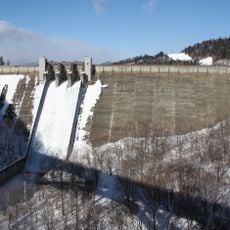
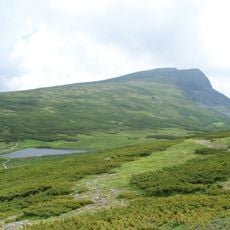
Taisetsu Dam is a rock-fill dam that spans 440 meters across the Ishikari River in Hokkaido, rising 86.5 meters high. The structure holds back a large body of water surrounded by mountain terrain, creating a significant reservoir in the region.
Construction began in 1965 following Typhoon Toyamaru, which devastated the Kamikawa Basin in 1954 and caused severe flooding. This project developed as a response to prevent such natural disasters from causing future damage.
The reservoir serves as a gathering place where local people fish and enjoy the mountain scenery throughout the year. The water and surrounding landscape have become part of how residents connect with nature in this part of Hokkaido.
The dam and reservoir are accessible from land, with viewpoints where visitors can observe the structure and surrounding landscape. Plan your visit during warmer months when paths are safest and weather is more stable.
The dam was one of the early major infrastructure projects in this part of Hokkaido, combining disaster prevention with water management for farming. It represents how engineering solutions shaped rural development in the 1960s and onwards.
The community of curious travelers
AroundUs brings together thousands of curated places, local tips, and hidden gems, enriched daily by 92,595 contributors worldwide.