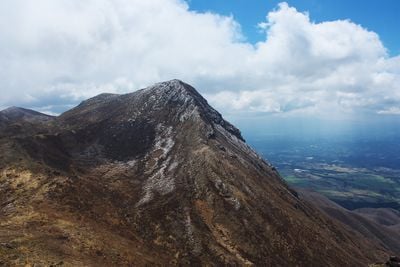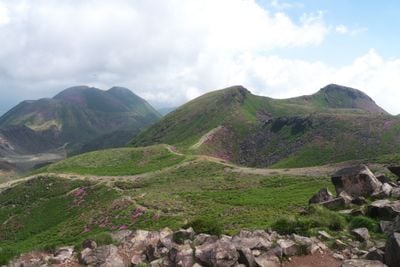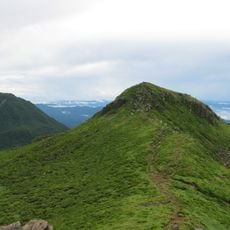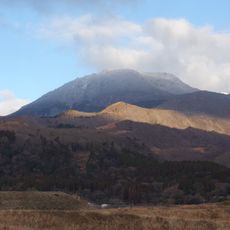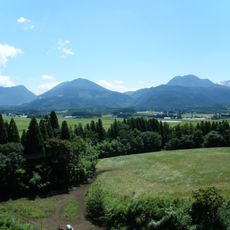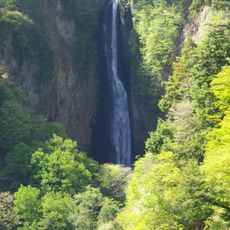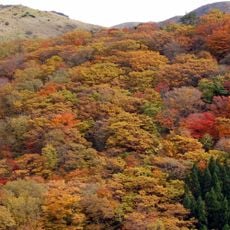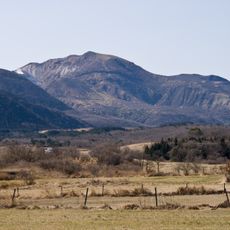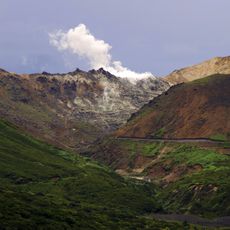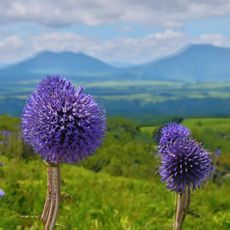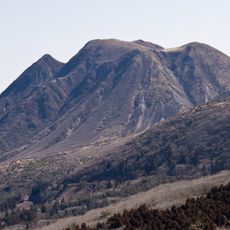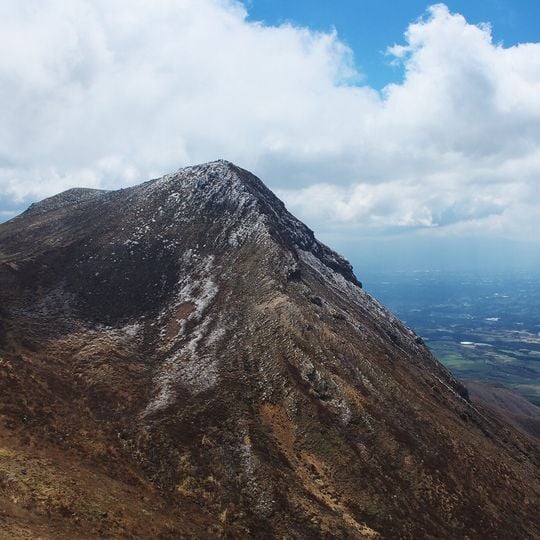
Mount Kuju, Stratovolcano in Taketa, Japan.
Mount Kuju is a stratovolcano in Aso-Kuju National Park that rises to 1,786 meters (5,860 feet) and features multiple volcanic peaks across its ridge. The mountain spans roughly 13 kilometers (8 miles) and displays different zones shaped by its elevation and geological features.
The volcano formed approximately 200,000 years ago through volcanic activity above a pyroclastic flow deposit. Its structure of andesite and dacite rocks documents the different stages of its formation.
The mountain ranks among Japan's 100 Famous Mountains, drawing people from different seasons who come to experience its slopes. This recognition has shaped it into a popular destination for hikers.
The mountain is accessible from two main starting points: Makinoto Pass and the Chojabaru Visitor Center. Hiking routes typically take four to six hours, so visitors should plan for a full day or spread the experience across two days.
The mountain's northern and southern plateaus support dairy farming operations at high elevation, a rare combination of pastoral agriculture on volcanic terrain. This working landscape reflects how local communities have adapted farming practices to the mountain's challenging environment.
The community of curious travelers
AroundUs brings together thousands of curated places, local tips, and hidden gems, enriched daily by 91,531 contributors worldwide.