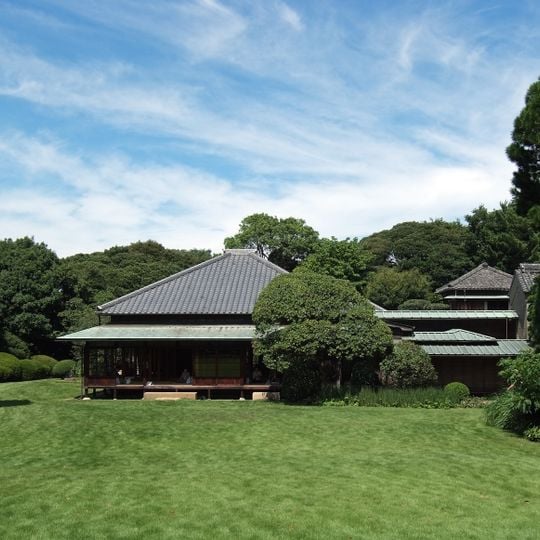
Tojō-tei, Historical residence in Matsudo, Japan
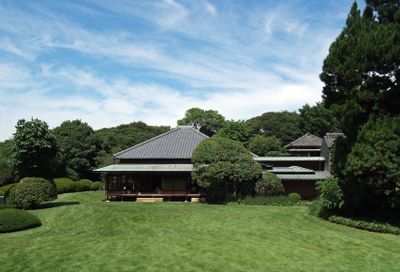
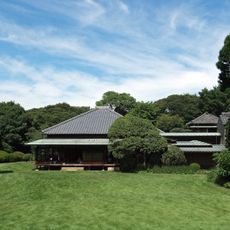
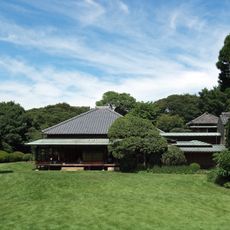
Tojō-tei is a single-storey wooden residence with a low-pitched grey tiled roof and a flat ridge cap. A wide veranda with a flat overhanging canopy on slender posts runs across the dark wood and glass facade, which has sliding panels and a recessed central opening. A lower wing repeats the roof and canopy beside an open lawn.
The property was built in 1884 as a private retreat for Tokugawa Akitake, the younger brother of the last shogun. After his death it passed through several hands until the city of Matsudo took it over in 1951 and opened it to visitors.
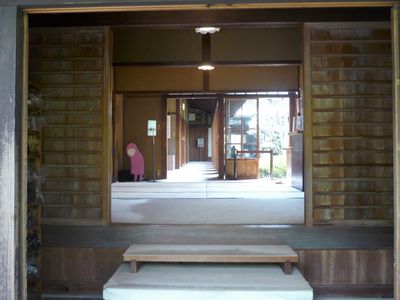
The name Tojō derives from "sotogaku," an outer enclosure of Matsudo Castle, which once stood on this plateau. The house became the main residence of the Matsudo Tokugawa branch in 1892, when Akitake's son Takeyasu was granted the rank of viscount. Visitors can see the transom carvings between rooms and the bathroom ceiling of woven cedar slats.
From Matsudo Station it takes about ten minutes on foot to reach the grounds. The paths in the garden are easy to walk, and the main rooms can be visited without much difficulty.
The garden's lawn is considered Japan's oldest surviving Western-style lawn garden, laid out from 1884 and finished in 1890 after Tokugawa Akitake's years in France and his visit to the Paris Exposition. A Chinese podocarpus stands as a symbolic tree on the grass, and the grounds were restored in 2018 using Akitake's own photographs.
The community of curious travelers
AroundUs brings together thousands of curated places, local tips, and hidden gems, enriched daily by 94,077 contributors worldwide.