Hikumo-jinja, Shinto shrine in Japan
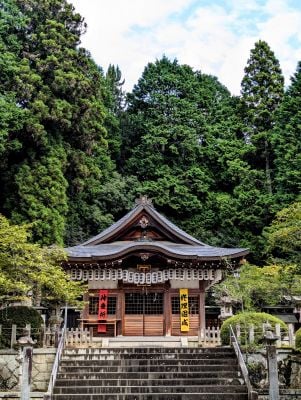
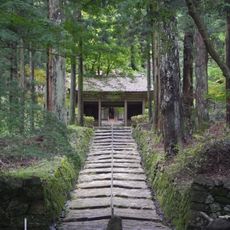
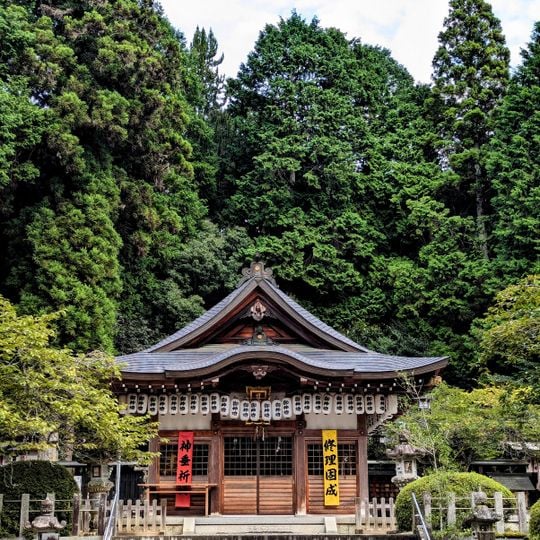
Hikumo-jinja is a Shinto shrine in the Maki district of Shigaraki, Kōka, Shiga Prefecture. Its honden, a three-bay nagare-zukuri hall with cypress-bark roofing, is dated by tradition to 1691 and is a registered national Tangible Cultural Property. The shrine grounds are crossed by the Shigaraki Kōgen Railway line, and a hexagonal stone lantern inscribed with the date 1306 stands on the site.
The shrine's founding date is unknown, but tradition traces it to Aka-kami Hikumo-no-miya, a former Ise sanctuary recorded in the Yamato-hime no Mikoto Seiki. It was listed as a village shrine in 1876 and renamed Hikumo-jinja in 1885, having previously been called Ueno-yama Tenjin and Makimura Tenmangu. The honden is said to have been built in 1691.
The shrine's name changed from Uenoyama Tenjin and Makimura Tenmangu to Hikumo-jinja in 1885. Its crest is the plum blossom, and the taiko-odori drum dance performed here is a Shiga Prefecture selected intangible folk cultural property. The annual festival is held on 5 May.
The shrine stands in Shigaraki-cho Maki, Koka, a five-minute walk from Kumoi Station on the Shigaraki Kogen Railway. The tracks run through the shrine grounds, so look both ways where the line crosses the precinct. The grounds are compact and explored on foot.
The shrine grounds are crossed by the Shigaraki Kogen Railway, so trains pass directly through the precinct. The hexagonal stone lantern in the grounds bears an inscription dated to 1306, in the Kamakura period, and is a cultural property designated by Kōka City.
The community of curious travelers
AroundUs brings together thousands of curated places, local tips, and hidden gems, enriched daily by 93,357 contributors worldwide.