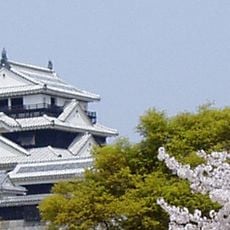
Asahi hachiman-jinja, Shinto shrine in Japan
Asahi hachiman-jinja is a Shinto shrine in the Asahidani area of Matsuyama, Ehime Prefecture. Its current main hall was rebuilt in 1889 after a fire in 1887, and its cypress-bark roof was replaced with copper sheeting in 1982. Behind the main hall lies an early keyhole-shaped burial mound attributed to a local chieftain, from which pottery fragments and clay figurines have been excavated.
According to shrine tradition, the site began in the late 7th century as Numito Myōjin, dedicated to Anumichi-shu no kami on the former temporary palace site of Emperor Chūai and Empress Jingū. It later received a divided deity from Yamazaki Hachiman in Yamashiro Province and was renamed Yamazaki Hachiman. In 1361 the Kōno clan built the hall at its present Asahidani location; the current hall was rebuilt in 1889 after a fire in 1887.
The shrine's name was changed to Asahi Hachiman in 1870 because sunlight strikes the sanctuary; the crest is a left three-comma tomoe. Its October 6 grand festival is followed on October 7 by a shinjo-sai in which rival portable shrines clash. Worshippers also come for safe childbirth, since Empress Jingu is said to have stopped here while pregnant on her way to Korea.
From JR Matsuyama Station or the Iyo Railway Matsuyama Station tram stop, walk north about 20 minutes; the Iyo Bus line 10 also stops at Asahihachiman-mae. The shrine stands in the Asahidani district, with Matsuyama Sogo Park and the temple Taiho-ji, known for its national-treasure hall and Ubazakura cherry tree, nearby.
Behind the main hall stands an early keyhole-shaped burial mound, said to belong to a local chieftain and, by legend, built on Emperor Jitō's orders together with the shrine. Pottery fragments and clay animal figures (haniwa) have been unearthed there.
The community of curious travelers
AroundUs brings together thousands of curated places, local tips, and hidden gems, enriched daily by 94,279 contributors worldwide.