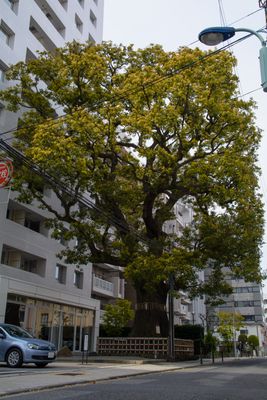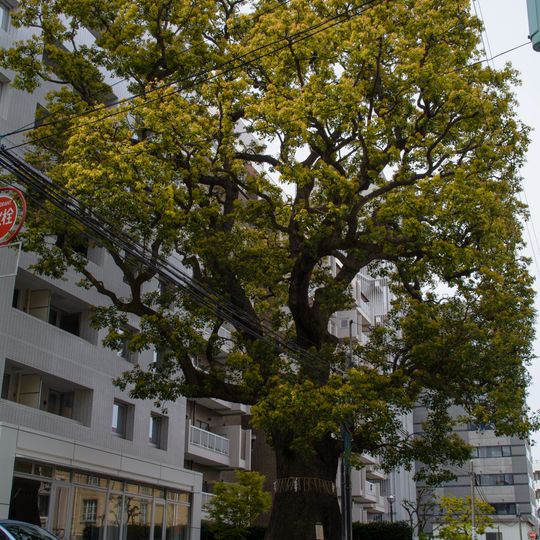
Hongō-yumimachi no Kusu, Camphor tree in Hongō, Tokyo, Japan.
Hongō-yumimachi no Kusu is a camphor tree at 1-28-32 Hongō, Bunkyō, with an estimated age of 600 years, a height of 20 metres and a trunk circumference of 8.4 metres. In the Edo period it was already famous as the "Kusunoki of Hongō"; the Meiji-era Tokyo Meisho Zue records that above about one jō the trunk divides into three stems.
The tree stands on the site of a hatamoto residence held by the Kaisho family, who claimed descent from Kusunoki Masashige and took the surname Kusunoki after the shogunate fell. The Kaisho served Tokugawa Ieyasu from the late Sengoku period, and Masafusa was rewarded for his part in Sekigahara in 1600 and the sieges of Osaka in 1614. The family kept the estate into the Meiji era, selling it in the early Taisho period.
The tree is also called Kusunoki-tei no Ōkusu and Yumimachi no Ōkusu. The neighbourhood name Yumimachi comes from the Edo-period archers' guards (oyumi-gumi yoriki dōshin) who had residences here, near the demon gate of Edo Castle. The Kaishō family, who held the estate, claimed descent from Kusunoki Masashige and later took the surname Kusunoki.
The tree stands at Hongō 1-chōme 28-32, a five-minute walk from Hongō-sanchōme Station on the Marunouchi and Ōedo lines, or six minutes from Kasuga Station on the Ōedo and Mita lines. It grows at the edge of a building plot, so it is seen from the street rather than entered.
The tree has no national natural monument designation; it is registered as a protected tree by Bunkyo Ward. Novelist Shiba Ryotaro visited it in 1991 and described it in his travel series Kaido o Yuku, in the Hongo neighbourhood volume.
The community of curious travelers
AroundUs brings together thousands of curated places, local tips, and hidden gems, enriched daily by 94,123 contributors worldwide.