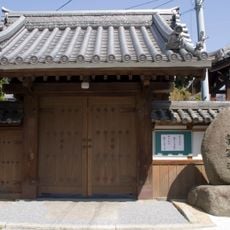
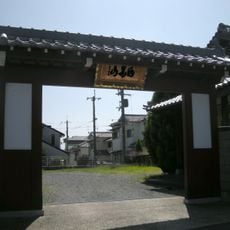
Fumonji, Buddhist temple in Takatsuki, Japan
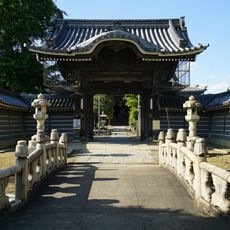
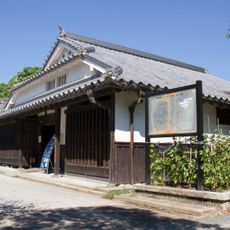
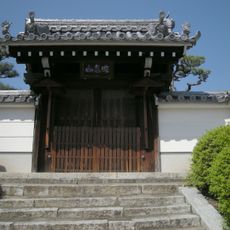
Fumonji is a Rinzai-shu Myoshinji-school temple in Tomita-cho, Takatsuki, with the mountain name Jiunzan. Its main hall, the hojo, was built in the Eiroku era (1558–1570) and moved to its present site in 1621; it is a designated Important Cultural Property. The temple garden, a dry landscape garden using Mount Abu as borrowed scenery, is a nationally designated Place of Scenic Beauty.
Founded in 1390 by Setsugan as a temple of the Kenchō-ji branch of Rinzai, Fumonji later fell into ruin. In 1561 Miyoshi Nagayoshi rebuilt it and ringed it with moats and earthen ramparts as Fumonji Castle, where Hosokawa Harumoto died in 1563. In 1604 it joined the Myōshin-ji branch; Ryūkei Shōsen became its ninth abbot in 1617 and built up the halls over 40 years.
Fumonji's mountain name is Jiunzan, and its main images are Shakyamuni and Eleven-Faced Thousand-Armed Kannon. The temple switched from the Rinzai Myoshinji school to Obaku when the Chinese monk Yinyuan Longqi became abbot in 1655, then returned to Myoshinji around 1661. Yinyuan lived here about seven and a half years, longer than at any other Japanese temple.
Fumonji is about a 15-minute walk from either JR Settsu-Tonda Station or Hankyu Tonda Station. Drivers reach it from the Ibaraki interchange of the Meishin Expressway via Route 171 and Osaka Prefectural Route 127. A free car park is provided for worshippers. Temple viewing runs from 1:30 to 4:00 p.m.
The temple grounds hold a hōkyōintō pagoda said to be the grave of Hosokawa Harumoto, who was confined here by Miyoshi Nagayoshi in 1561 and died at the temple in 1563. Its inscription reads "Ryōshōin-dono Zen Ukyō-no-kami Shinzetsu Kiyokimi Daikoji".
The community of curious travelers
AroundUs brings together thousands of curated places, local tips, and hidden gems, enriched daily by 93,806 contributors worldwide.