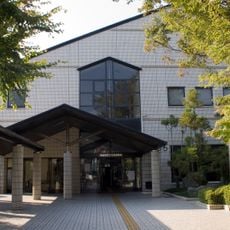
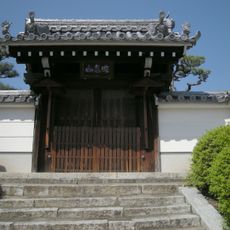
Ibaraki Municipal Kawabata Literature Hall, Literature museum and biographical exhibition in Ibaraki, Japan.
The Ibaraki Municipal Kawabata Literature Hall is a literature museum dedicated to Yasunari Kawabata, Japan's first Nobel Prize winner in literature. The collection holds about 400 items including manuscripts, letters, and photographs that document his life and work.
The hall opened in May 1985 in Ibaraki, the city that absorbed the village of Toyokawa in 1956. Kawabata was taken in by his grandfather after his parents died and lived in Toyokawa from age three until he graduated from the old-system Ibaraki Middle School, now Osaka Prefectural Ibaraki High School. The museum is attached to the municipal Kamichujo Youth Center.
The displays follow Kawabata's life through sections on his upbringing in Sukusō, his years at the old Ibaraki Middle School and First Higher School, and his Tokyo Imperial University period, when he wrote The Izu Dancer and The Scarlet Gang of Asakusa. Later sections cover Snow Country, The Master of Go, Thousand Cranes, The Sound of the Mountain, his presidency of Japanese PEN, and The Old Capital.
The museum shares its building with the Ibaraki Municipal Kamichujo Youth Center. It is open from 9:00 to 17:00 and closes on Tuesday, on Monday afternoons, and on the day after public holidays. Free parking is available; on foot it is about 15 minutes from JR Sōjiji Station and 20 minutes from JR Ibaraki Station or Hankyū Ibaraki-shi Station.
The hall shares its building with the Ibaraki Municipal Kamichujo Youth Center. Among the roughly 400 items on display is a movable model of the house in Toyokawa Village where Kawabata lived as a child; he moved there at age three after his parents died and stayed until graduating from the old Ibaraki Middle School.
The community of curious travelers
AroundUs brings together thousands of curated places, local tips, and hidden gems, enriched daily by 94,131 contributors worldwide.