Gōshō-ji, Buddhist temple in Echizen, Japan
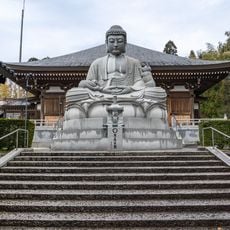
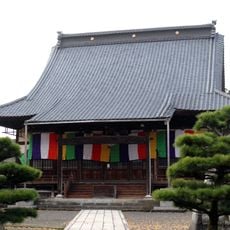
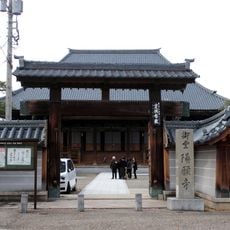
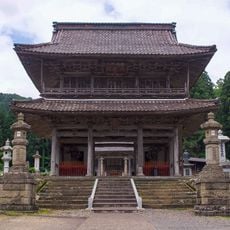
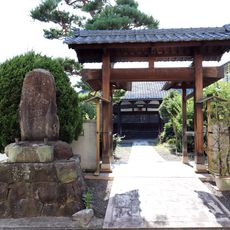
Gōshō-ji is a Jōdo Shinshū temple in Echizen, Fukui Prefecture, and the head temple of the Shinshū Izumiji-ha. Its precinct occupies the site of the former Aojima no Chōja residence. The Amida Hall and the Founder's Hall were rebuilt in 1884 after a fire in 1878, while the bell tower, sutra storehouse and gates date from 1811.
Tradition credits Shinran with founding the temple in 1233 in the Izumoji district of Kyoto and entrusting it to his disciple Zenran, though sources hold that it was founded by Jōsen, a leading pupil of Kakunyo, third abbot of Hongan-ji. During the Ōnin War its Kyoto site burned, and in 1338 it lodged at Shōjō-ji in Echizen. In 1596 the twelfth abbot, Zenshō, moved it to its present site, where the castle town of Gobuichi grew up around it as a temple town.
Gōshō-ji is the head temple of the Shinshū Izumiji-ha branch, which became independent in 1878 after the abolition of the Ministry of Religious Affairs. From the Genroku era until the Meiji Restoration the temple belonged to the Tendai school as a monzeki of Shōren-in, and its crest was the iris-diamond of the Hanazono family. The temple holds three city-designated cultural properties: the Kōmyō-gō main image, a statue of Prince Shōtoku, and a single-sleeve Amida statue kept private.
The temple grounds are open daily, and the pathways between buildings are easy to follow without a map. Comfortable shoes are a good idea, since you will walk the entire grounds on your own.
The temple grounds are said to occupy the site of the residence of Ajima no Kimi Osukemaro, known as the Ajimano Chōja Yashiki. The temple also received imperial edicts naming it a chokugan-ji, a temple for imperial prayer, from Emperors Kōmyō, Go-Kashiwabara and Go-Yōzei.
The community of curious travelers
AroundUs brings together thousands of curated places, local tips, and hidden gems, enriched daily by 94,262 contributors worldwide.