Yokose Kofun, Keyhole-shaped kofun in Ōsaki, Kagoshima Prefecture, Japan
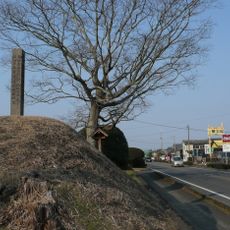
Yokose Kofun is a burial mound in Ōsaki with the traditional keyhole shape that characterizes ancient Japanese tombs. The site surrounds a central burial chamber and displays the classic features of this important burial form.
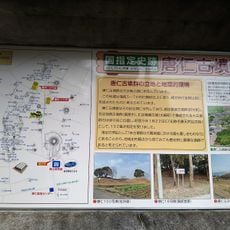
Yokose Kofun was built in the mid-to-late 5th century, in the middle Kofun period, as shown by its keyhole shape, its stone burial chamber and the Sue ware found there. It is recorded in the 1824 Ōsaki meishō-shi and appears as Ōtsukayama in the 1843 Mikuni meishō zue. It was looted around 1902 and designated a national historic site on 8 September 1943.
Cylindrical haniwa and shaped haniwa, including shield-shaped examples, were found on the mound surface; this is the southernmost kofun in Japan accompanied by haniwa. A small shrine now stands on the front part, and the tomb has been known since the Edo period, appearing in the 1824 Ōsaki Meishō-shi and the 1843 Mikuni Meishō Zue as Ōtsukayama.
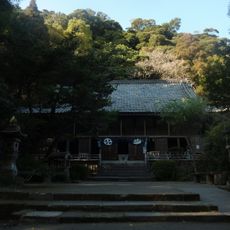
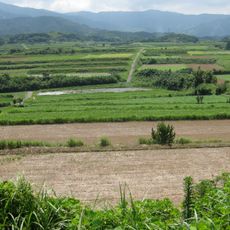
The mound stands on a slope in a paddy field area about 6 m above sea level, west of Shibushi Bay. The rear circular part is roughly 1 m higher than the front, and erosion has left the stone burial chamber exposed at its top. The site is known since the Edo period and a small shrine now stands on the front part.
The mound is the southernmost kofun in Japan known to have been accompanied by haniwa: cylindrical and shield-shaped clay figures were found on the burial mound's surface. Its moat, possibly shield-shaped, measures 12 to 23 metres wide and 1.5 metres deep.
The community of curious travelers
AroundUs brings together thousands of curated places, local tips, and hidden gems, enriched daily by 93,473 contributors worldwide.