Mizuwakasu Shrine, Shinto shrine in Okinoshima, Japan.
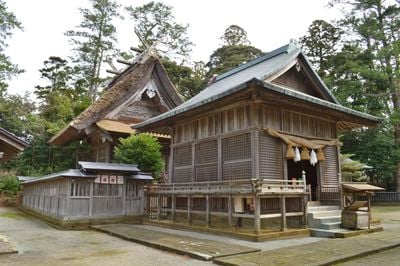
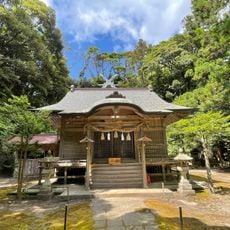
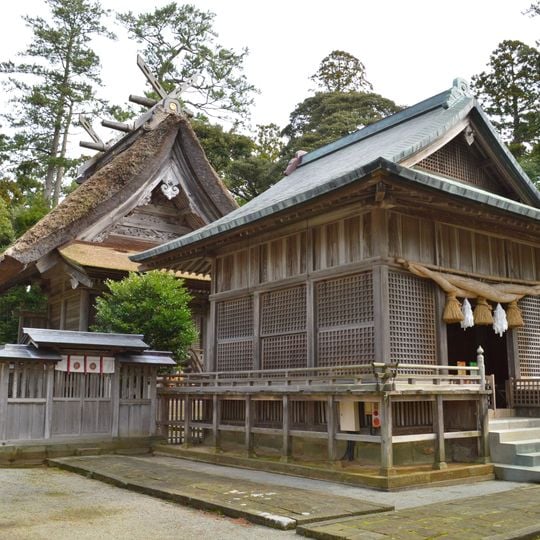
Mizuwakasu Shrine is a Shinto shrine in the Kori area of Okinoshima, Shimane Prefecture. Its main hall, built in 1795, is a thatched Oki-zukuri structure with a gabled, side-entrance body, crossed finials and a pent roof over the front. In front stands a hall with a green-grey metal roof, lattice panels and a veranda, hung with twisted straw ropes and white paper streamers.
The shrine's founding documents were lost in medieval wars, but a 1688 chronicle records a tradition that the deity landed at Igo and was moved by white doves. In 842 it was listed among official shrines, and by 927 the Engishiki named it a Myojin Taisha. A 1676 flood destroyed the buildings, and they were rebuilt at the present site in 1678.
The shrine's name is written 水若酢, though a Meiji-era survey noted the original form was 水若咋, with 酢 a later substitution. Its biennial Goka Festival, held in even years, features the yamabiki shinji, in which children under eight pull a float called Hōraizan to the otabisho, alongside mikomai, shishimai and yabusame. The festival is one of Oki's three great matsuri and a Shimane Prefecture intangible folk cultural property.
The shrine stands at 723 Kori, Okinoshima, about 20 km north of Saigo Port. Buses from the port stop at Mizuwakasu-jinja-mae after roughly 40 minutes, but departures are few, so check return times before setting out. The precinct also holds the Mizuwakasu Shrine kofun cluster, including a 20 m round tomb behind the main hall.
The shrine grounds hold two burial mounds. Mound No. 1, east of the hall, contains a corridor-style stone chamber about 11 metres long, the largest in the Oki Islands, found in 1920 when a pond was filled in; the pond was the mound's surrounding moat. Swords, iron arrowheads and glass beads came from it.
The community of curious travelers
AroundUs brings together thousands of curated places, local tips, and hidden gems, enriched daily by 94,781 contributors worldwide.