永富家住宅, Village headman's house in Tatsuno, Japan
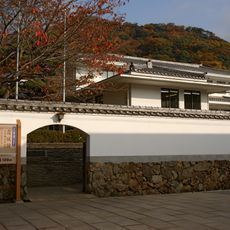
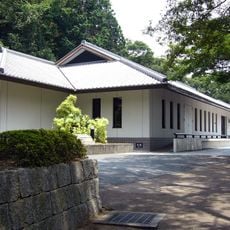
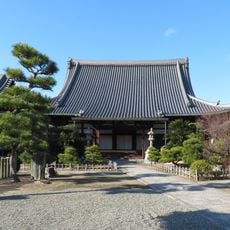
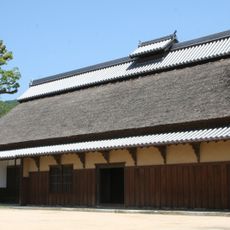
The Nagatomi House is a village headman's residence in Tatsuno, Hyogo Prefecture, built between 1819 and 1822. Its main building covers 478 m² with a hipped, tiled roof and 23 rooms, including a formal entrance with a raised step platform, upper, middle and lower guest rooms, and a Buddhist altar room. Eight structures survive on the 3,089 m² grounds, among them a nagaya gate completed in 1808 and storehouses.
The Nagatomi family settled here around 1600 and served as village headmen for the Tatsuno domain. From the mid-Edo period they grew wealthy, lent money to the domain and transported its tribute to Osaka, earning treatment as senior samurai and permission to bear surnames and swords. The main house was built from 1819 to 1822; the site became a national Important Cultural Property in 1967.
The Nagatomi family served as village headmen (shōya) of the Tatsuno domain for generations and were allowed to bear surnames and swords as 'country retainers'. The head of the household in the Meiji era, Toshio, was known as a Chinese poet under the pen name Bushō. His fourth son Morinosuke was adopted by the Kashima family and developed Kajima Construction.
The house welcomes visitors with nearby parking and easy access from public transportation stations. Wear comfortable shoes as you will walk through different levels and navigate traditional tatami rooms.
The 1820 board drawings and 13 construction account books kept with the house were added to the Important Cultural Property designation in 1971. They record how the main house was built between 1819 and 1822. The garden across the road, Shūkeien, holds about 3,000 iris plants of some 50 varieties, flowering in June.
The community of curious travelers
AroundUs brings together thousands of curated places, local tips, and hidden gems, enriched daily by 94,767 contributors worldwide.