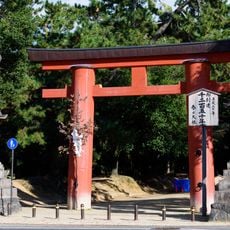
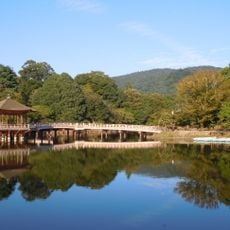
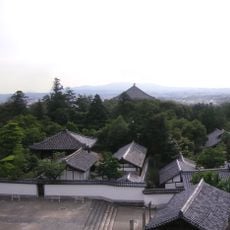
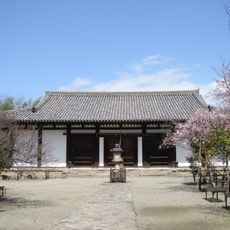
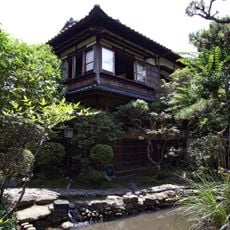
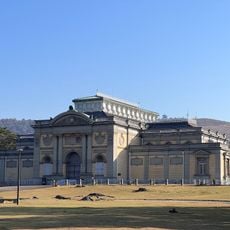
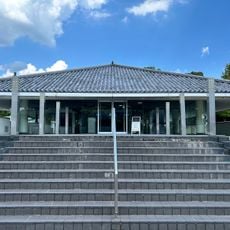
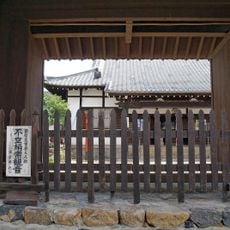
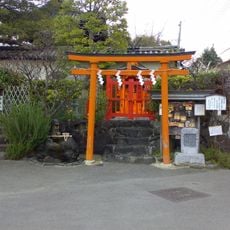
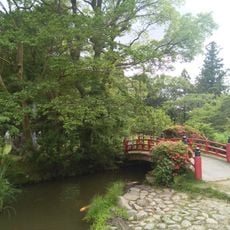
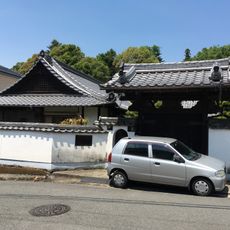
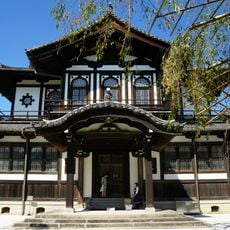
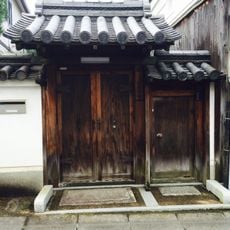
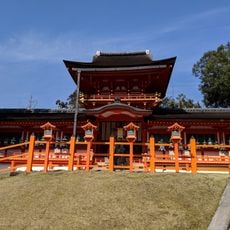
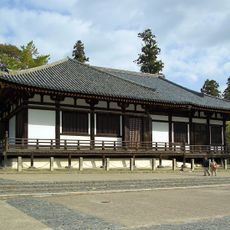
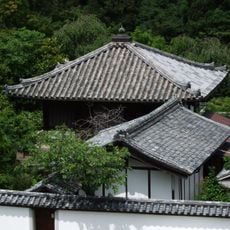
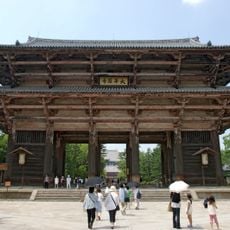
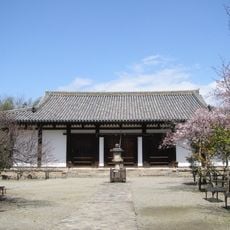
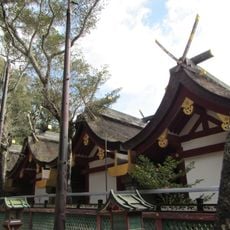
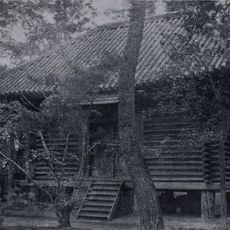
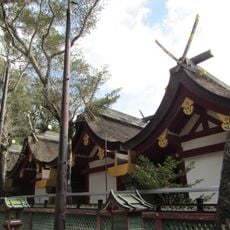
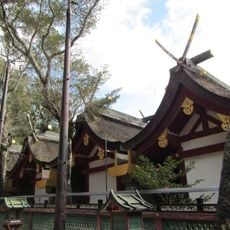
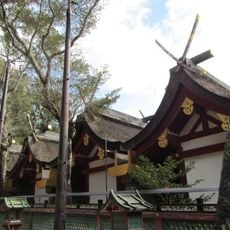
Enomoto Shrine, Setsumatsusha shrine in Nara, Japan.
Enomoto Shrine is a subsidiary shrine in Nara built in the traditional Kasuga-zukuri style, featuring simple wooden structures with minimal decoration. The buildings display classic Japanese shrine architecture with steeply pitched roofs and natural wood finishes throughout.
Enomoto Shrine appears in the Engishiki shrine register as "Kasuga Shrine" of Shikige District, Yamato Province, while today's Kasuga Taisha is listed there as "Kasuga Saijin". The name Enomoto is first recorded in 1084, in a fragment of the Kōdaiki, as "Enomoto Myōjin-mae". Called Enomoto-sha in the Edo period, it was renamed "Shikinai Kasuga Shrine" in 1876.
Until the Middle Ages the deity here was the goddess Kose-hime Myōjin; a 1603 text records Sarutahiko Ōkami instead. The name Enomoto appears in 1084, and until the Meiji era pilgrims stopped here before the main hall, striking a pillar with their fists because the Enomoto deity was considered hard of hearing, saying "Kasuga-san, I have come to worship."
The shrine stands in the southwest corner of Kasuga Taisha's main sanctuary corridor, so it is reached on foot along the same approach as the main hall. Until the Meiji era, pilgrims stopped here first, gripped a pillar and knocked on it with a fist before walking around the small shrine.
Until the Meiji era, visitors to Kasuga Taisha stopped here first: they gripped a pillar of Enomoto Shrine and knocked on it repeatedly with their fist, since the deity was said to be hard of hearing, saying "Kasuga-san, I have come to worship", then walked around the small shrine before proceeding to the main hall.
The community of curious travelers
AroundUs brings together thousands of curated places, local tips, and hidden gems, enriched daily by 93,544 contributors worldwide.