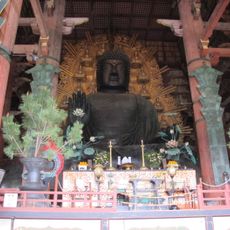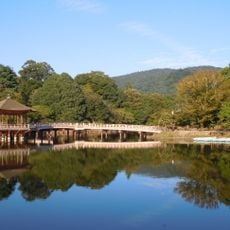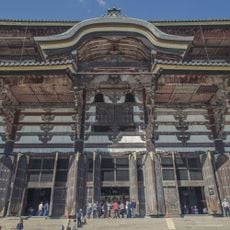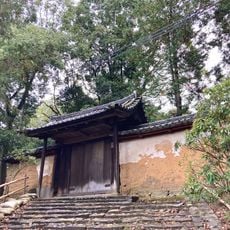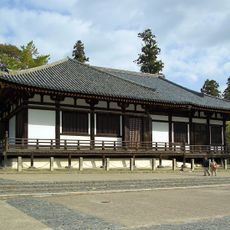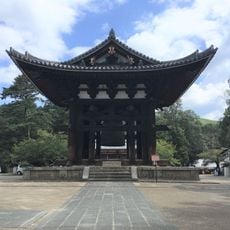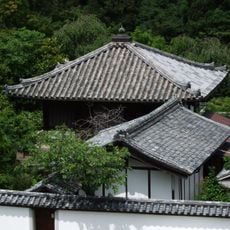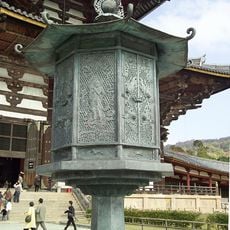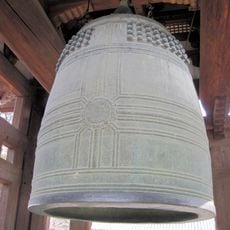
Nigatsu-dō, Buddhist temple hall on Mount Wakakusa, Japan.
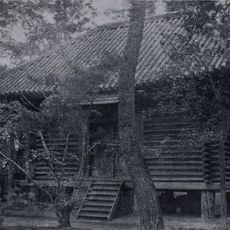
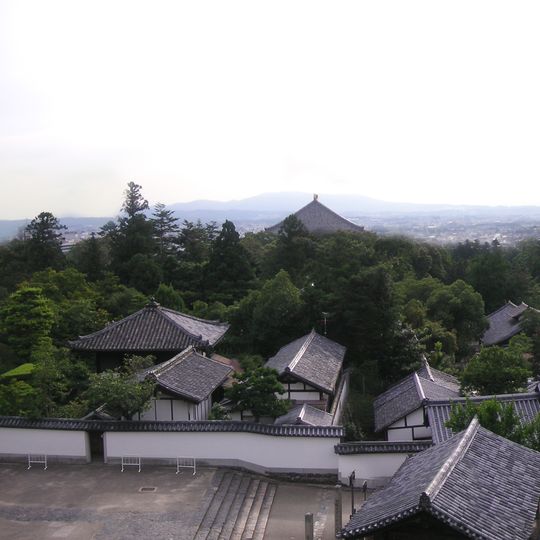
Nigatsu-dō is a wooden Buddhist temple hall on the eastern slope of Mount Wakakusa, linked to the main Tōdai-ji complex by stone pathways. The kakezukuri construction rests on stilts, allowing the platform to float above the sloping terrain and offer a wide view over the city.
Monk Sanetada founded this hall in 752 as part of the religious life at Tōdai-ji. A fire during the ceremony in 1667 destroyed the original structure, which was completely rebuilt by 1669.
The hall's name comes from the second month of the lunar calendar, when Shuni-e is held; since 752 monks have repented before the Eleven-Faced Kannon for the nation's welfare. On 12 March, sacred water is drawn from the Wakasa Well in front of the hall, not beneath it, and offered to the image. The well is screened by sakaki branches and a shimenawa rope, and ordinary visitors may not enter.
The building sits at 406-1 Zōshichō in Nara and is open to visitors without an entrance fee, reachable by a walk of about 16 minutes from Kintetsu Nara Station. The climb up stone steps leads through the forest and requires comfortable shoes and some stamina.
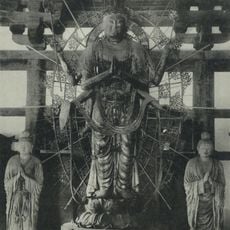
The hall holds two Eleven-Faced Kannon statues, a large one and a small one, both hibutsu. Not even the rengyō-shū monks leading the Shuni-e may look at them. The small Kannon's portable shrine, called a mikoshi, is carried out on 7 March, the last day of the first seven days.
The community of curious travelers
AroundUs brings together thousands of curated places, local tips, and hidden gems, enriched daily by 93,181 contributors worldwide.