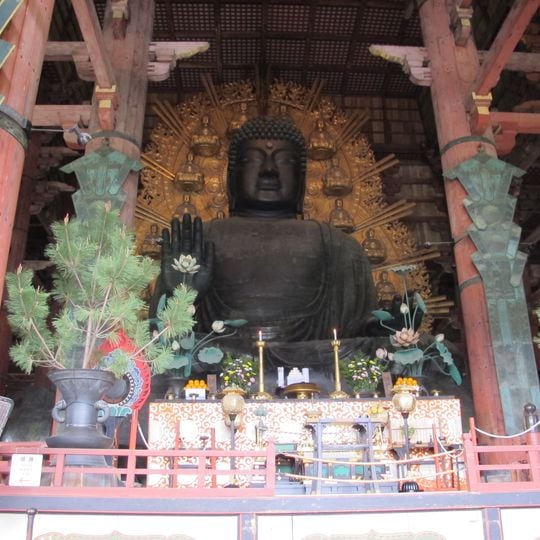
Tōdai-ji Daibutsu, Bronze Buddha statue in the Great Buddha Hall, Nara, Japan
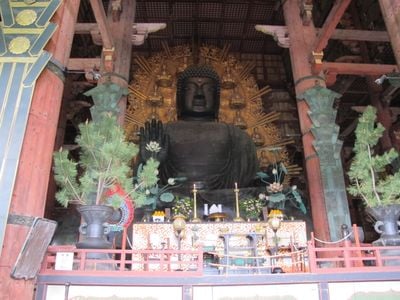
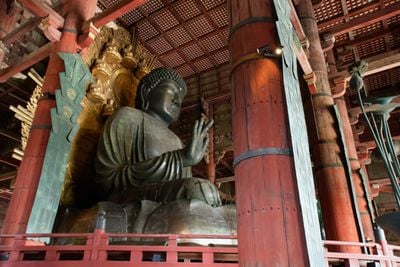
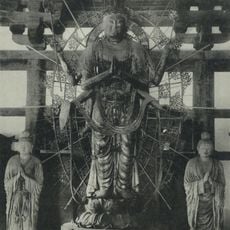
Tōdai-ji Daibutsu is a bronze Buddha statue in the Great Buddha Hall of Nara, regarded as one of the largest such figures in Japan. The surface shows the sheen and patina of copper, while the facial features appear calm and directed downward.
Emperor Shomu ordered the construction in 745, and completion followed seven years later with a ceremony attended by thousands of monks. Later damage from fire led to several restorations, with parts from different eras existing side by side today.
The figure carries the name Rushana Butsu and embodies for visitors a specific form of Buddhist teaching, visible in the hand position and seated posture. The space around the statue allows viewing from different angles, with many people pausing quietly in front of it.
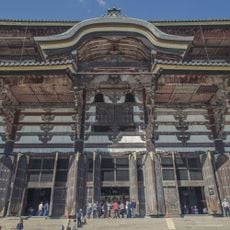
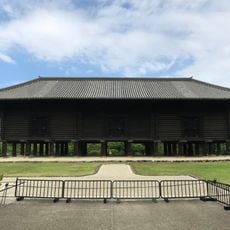
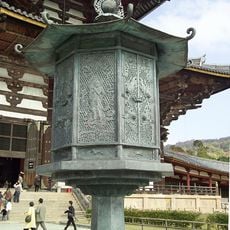
The statue fills the Great Buddha Hall, whose present width of 57.5 m is about two-thirds of the original building's roughly 86 m. Visitors walk around the base, where the 70 m perimeter of the pedestal and the lotus petals with engraved Huayan imagery can be examined up close. Look for the bronze ornaments on the wooden columns flanking the figure.
A wooden pillar in the hall has a hole at the base through which visitors can crawl, considered a good luck charm. This hole is said to match the measurements of the statue's nostril.
The community of curious travelers
AroundUs brings together thousands of curated places, local tips, and hidden gems, enriched daily by 93,340 contributors worldwide.