Himuro Shrine, Shinto shrine in Japan
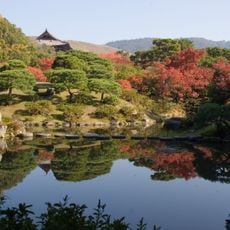
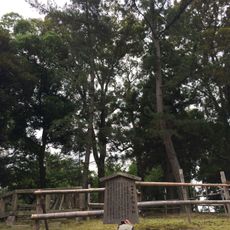
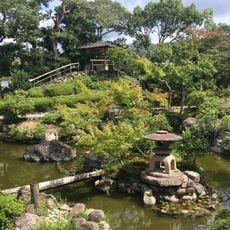
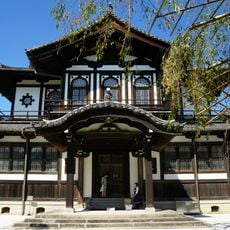
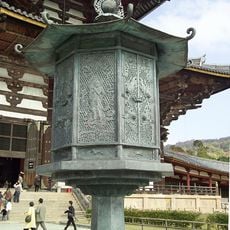
Himuro Shrine stands on a slope facing Tōdaiji-dōri in Nara, entered through a Kasuga-style first torii. Stone lanterns line the approach, with a purification basin on the right and the Haraedo shrine on the left; behind them lie Kagami Pond and a weeping cherry. Stone steps lead up to a four-legged gate with east and west corridors, and the honden behind it, rebuilt 1861–1864, is a three-bay nagare-zukuri hall with cypress-bark roofing.
Founded in 710 by order of Empress Genmei, when an ice deity was enshrined at Tsukihi-iwa on Mount Kasuga; ice from ponds at Kasugano was stored in icehouses and delivered to the Heike capital from 711. The shrine moved to its present site in 860 under Emperor Seiwa, where three deities were jointly worshipped. The main hall was built in 1217, and in the 13th century the shrine became a base of the Nanto gakuso, Nara's court music office.
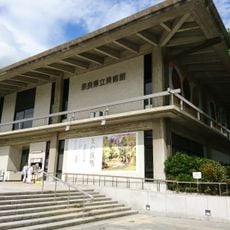
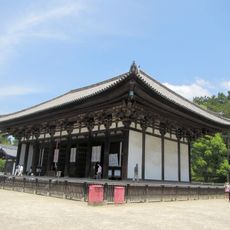
The shrine was the seat of the Nanto Gakuso, one of Japan's three great music offices, from the 13th century, and its priests doubled as court musicians. Its worship hall, a dance stage with railings, was the ensemble's centre. The wooden bugaku mask of Ryoo, a Kamakura-period piece 29.5 cm long, is deposited at the Nara National Museum. The shrine is now supported by parishioners and the ice industry.
The shrine is easily accessible from Nara city and welcomes visitors during daylight hours with no entry barriers. Clear pathways connect all main areas and shaded spots are available for resting.
The shrine keeps a wooden bugaku mask of the Ryōō dance, 29.5 cm long and 24 cm wide, coloured and carved in the Kamakura period and now deposited at the Nara National Museum. The shrine also preserves the memory of the Nanto gakuso, the music office whose musicians once served as its priests.
The community of curious travelers
AroundUs brings together thousands of curated places, local tips, and hidden gems, enriched daily by 93,535 contributors worldwide.